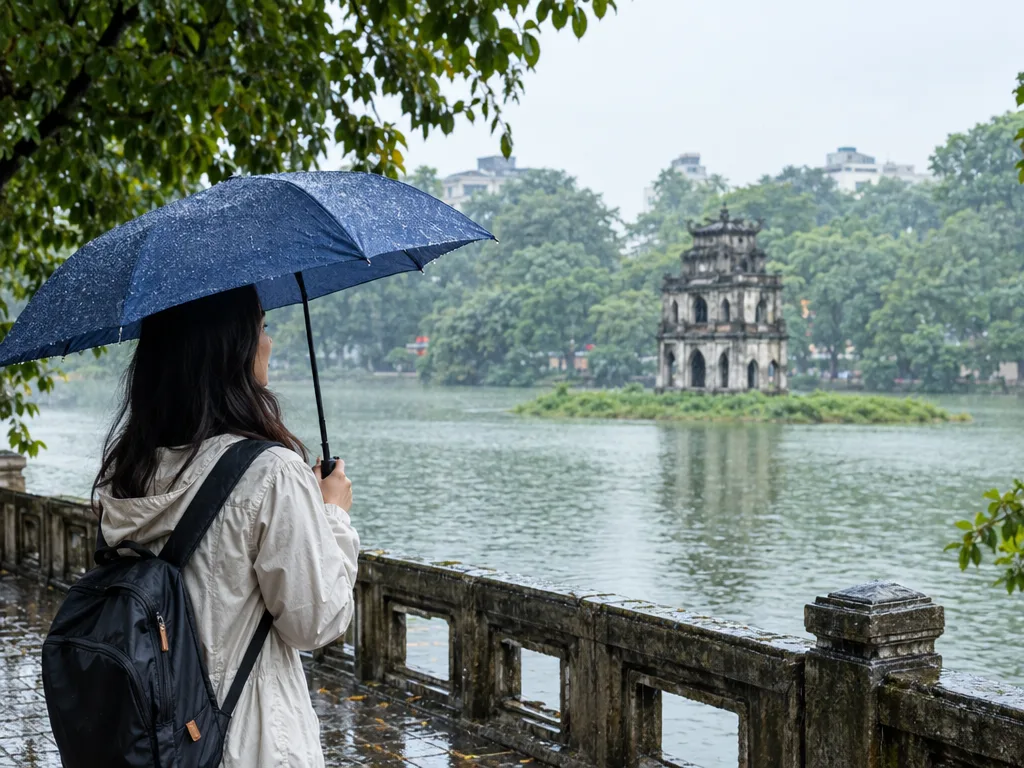
A rainy forecast does not automatically ruin a day trip from Hanoi. It changes the kind of day that makes sense. Instead of choosing a destination from a wish list, compare shelter, road exposure, walking surfaces, boat dependence, and how easily you can shorten the route. This weather-aware approach helps you choose between craft villages, heritage sites, mountain scenery, and longer excursions without turning one shower into a failed itinerary.
Start with the weather question, not the destination list
“Rainy season” is not one uniform condition. A forecast may mean a short afternoon shower, a cool grey day, steady drizzle, or a storm system that affects roads and water activities. Your first decision is therefore practical: how much weather uncertainty can your group tolerate?
- Light or intermittent rain: You can still plan an outdoor route if it has indoor pauses and a flexible return.
- Steady rain: Choose a destination where workshops, communal buildings, cafés, museums, or covered attractions can carry more of the day.
- Thunderstorms or strong wind: Avoid building the day around exposed viewpoints, mountain paths, or a cruise that depends on safe water conditions.
- Unclear forecast: Pick a route with a simple Plan B rather than paying for a tightly timed sequence of distant stops.
Official Vietnam Tourism guidance describes Hanoi as hot, humid, and rainy from June to August, while December to March can be cool, misty, and cloudy. Those broad patterns are useful for planning, but they do not replace a local forecast for the actual date. Treat the forecast as a decision tool, not a promise.
Match the trip to your group’s rain tolerance
The best rainy-day choice depends as much on people as on places. A couple who enjoys photographing wet lanes may accept conditions that would exhaust a family with a toddler. Older travellers, anyone with limited mobility, and visitors carrying cameras or electronics usually benefit from shorter walks and more reliable shelter.
For families and mixed-age groups
Prioritise one anchor activity that works even if the weather worsens. A pottery workshop in Bat Trang, for example, can give children something hands-on to do while adults explore the village at a slower pace. The point is not that every workshop is identical; confirm the current arrangement before travelling. Build in a meal break, dry time, and an early-return option instead of adding several outdoor stops.
For photographers and culture-focused travellers
Rain can make tiled roofs, old walls, tree-lined lanes, and market colours more atmospheric. Duong Lam may suit visitors who are happy to move slowly and pause under cover, but a wet-day visit should be approached as a living village experience rather than a checklist of photo stops. Ask before photographing people, homes, or ceremonies, and keep footwear suitable for uneven or slippery surfaces.
For active travellers
Ba Vi is more weather-sensitive because a nature day can involve slopes, forest paths, steps, and exposed viewpoints. A damp forecast does not make the trip impossible, but it raises the importance of checking access, choosing a modest walking objective, and carrying a genuine backup plan. Do not treat an ambitious hike as a good idea simply because the rain has paused at breakfast.
Choose destinations by how much of the day is outdoors
A useful comparison is to divide each possible trip into four elements: transfer, outdoor movement, sheltered activity, and return. The more of the day that depends on exposed conditions, the more carefully you should match it to the forecast.
Craft and village days
Bat Trang is often the easiest type of day to adapt because the experience can be organised around a workshop, craft demonstrations, shopping, food, and short walks between stops. Its proximity to Hanoi also makes a shorter visit more realistic if the weather deteriorates. Avoid assuming that a market or workshop will operate exactly as it did on a previous visit; confirm the venue and timing, then keep the route compact.
Heritage-focused days
Duong Lam can work in light rain when your group enjoys historic architecture, local food, and an unhurried village atmosphere. The trade-off is that the charm is in moving through lanes and courtyards, many of which may be wet or uneven. Wear shoes with grip, protect valuables, and plan fewer stops. A respectful visit can be worthwhile even when the day is grey, provided you are comfortable with a slower pace.
Nature and mountain days
Ba Vi offers a stronger sense of escape but less control over conditions. Wet paths can change the walking experience, mist can reduce views, and a route that feels easy in dry weather may take longer. Choose it when your group genuinely enjoys nature in variable weather, not when you are trying to force an outdoor day to happen. If the forecast is poor, keep the plan to one manageable area and avoid stacking a demanding walk with several distant attractions.
Boat-dependent excursions
Ninh Binh and Ha Long Bay can be spectacular, but water-based experiences deserve a separate weather check. Official Vietnam Tourism information notes that Ha Long Bay is about two and a half hours by road from Hanoi and that summer storms can affect cruises. That makes a Ha Long Bay day trip especially sensitive to cancellations, delays, and a high transfer-to-sightseeing ratio. If the forecast is unstable, a nearer land-based plan may offer better value for your day.
Build a weather-resilient itinerary
A resilient itinerary has a clear centre and flexible edges. Start with one non-negotiable experience, then add only stops that can be removed without breaking the day. For example, a Bat Trang plan might centre on a confirmed workshop, with village browsing and lunch around it. A Duong Lam plan might centre on one heritage area and a meal, with extra lanes treated as optional. A Ba Vi plan might centre on a short nature walk, with viewpoints or longer trails dependent on conditions.
Use time blocks rather than a minute-by-minute schedule:
- Departure block: Leave enough margin for slower traffic and wet-weather loading.
- Anchor block: Protect the workshop, main heritage visit, or primary landscape experience.
- Drying and meal block: Give people time to warm up, dry footwear, and eat without rushing.
- Decision block: Decide whether energy and weather justify one more stop.
- Return block: Leave earlier than you would on a clear day if roads, visibility, or tiredness are becoming concerns.
This structure also helps private tours. A private vehicle or guide may make it easier to change the order of stops, but flexibility is not unlimited. Ask what can actually be shortened, whether waiting time is included, and what happens if a boat or outdoor activity is cancelled.
Compare transport choices in wet weather
Transport is part of the experience, not just the distance between attractions. Vietnam Tourism’s transport guidance describes a mix of buses, trains, taxis, motorbikes, cycling, and private vehicles. For a day trip in uncertain weather, compare them by exposure, recovery options, and the comfort of your least mobile traveller.
A private car can make it easier to carry rain gear and adjust the order of stops, but ask where the vehicle can drop you and how much walking remains. Public transport may be economical and authentic, yet transfers and waiting outside can feel harder in heavy rain. Motorbikes offer independence but expose riders to slippery roads, spray, and reduced visibility; they are a poor default for inexperienced riders or families. Cycling is best reserved for a forecast and route that genuinely suit it, not used as a commitment made before checking the sky.
For longer trips, calculate the full weather cost: door-to-door transfer, boarding time, time outdoors, and the effort required to recover if one part of the plan changes. A destination that looks impressive on a map may be a weak rainy-day choice if most of the day is spent travelling and the main activity is cancelled.
Pack for comfort, not just survival
Good packing reduces the temptation to rush or abandon a worthwhile visit. Bring a lightweight rain jacket or poncho, shoes with grip, a small towel, a waterproof pouch for phones and documents, and a spare layer for anyone who gets cold after rain. A dry bag or zip pouch is useful for cameras, medication, and passports. Carry cash in a protected place, but do not assume every stop will accept the same payment methods.
Umbrellas can help on village lanes but are awkward on steps, crowded paths, and windy viewpoints. A poncho leaves both hands free and may be more practical for active routes. If you are travelling with children, pack a snack that survives a delayed meal and one small activity for waiting time. The aim is not to overpack; it is to keep one wet hour from becoming a group-wide crisis.
Know when to change the plan
Changing plans is good travel planning, not failure. Reconsider a route when official updates, your operator, or local staff report a cancellation or access issue; when lightning or strong wind makes exposed areas unsafe; when paths are too slippery for your group; or when the transfer would leave too little time for the actual experience.
Do not wait until everyone is exhausted. Set a decision point before leaving Hanoi: if the weather reaches a certain level, you will shorten the route, replace an outdoor stop, or return. Keep the substitute realistic. A nearby craft or food experience may be better than crossing the region to rescue an itinerary built around a distant viewpoint.
A simple comparison checklist before booking
- How much of the day is exposed to rain, heat, wind, or slippery ground?
- What is the one activity that still makes the trip worthwhile if everything else is removed?
- Can that activity be confirmed, rescheduled, or replaced?
- How easy is it to shorten the route without losing the return transport?
- What will the least mobile or least weather-tolerant person in the group need?
- Does the transport choice protect comfort and allow a realistic early return?
- Have you checked the forecast and current local conditions close to departure?
Make the decision that fits the actual day
The best Hanoi day trip in rainy weather is rarely the one with the most famous stops. It is the route that preserves one meaningful experience while keeping travel, shelter, walking, and return time under control. Choose craft and heritage when you want more control, treat nature as a flexible outdoor option, and be cautious with long or boat-dependent excursions when conditions are unstable. A smaller plan with room to adapt usually feels better than an ambitious itinerary that asks the weather to cooperate all day.
JOIN THE CONVERSATION
Comments (0)
No comments yet. Be the first to share a thought.