Duong Lam Ancient Village is often described as a historic village near Hanoi, but that label only tells part of the story. The rewarding way to visit is to notice how old houses, communal spaces, pagodas, lanes, wells, gardens, food traditions, and everyday family life fit together. This guide focuses on what to look for, what to eat, how to structure a calm route, and how to behave as a guest in a living community.
What makes Duong Lam different from a museum village?
Duong Lam is best understood as a settled rural landscape rather than a single attraction. Its value comes from the relationship between buildings and village life. Historic houses sit beside working homes, small shops, gardens, shrines, lanes, and agricultural land. That mix changes the rhythm of a visit: you are not moving from one staged exhibit to another, and not every doorway is a tourist stop.
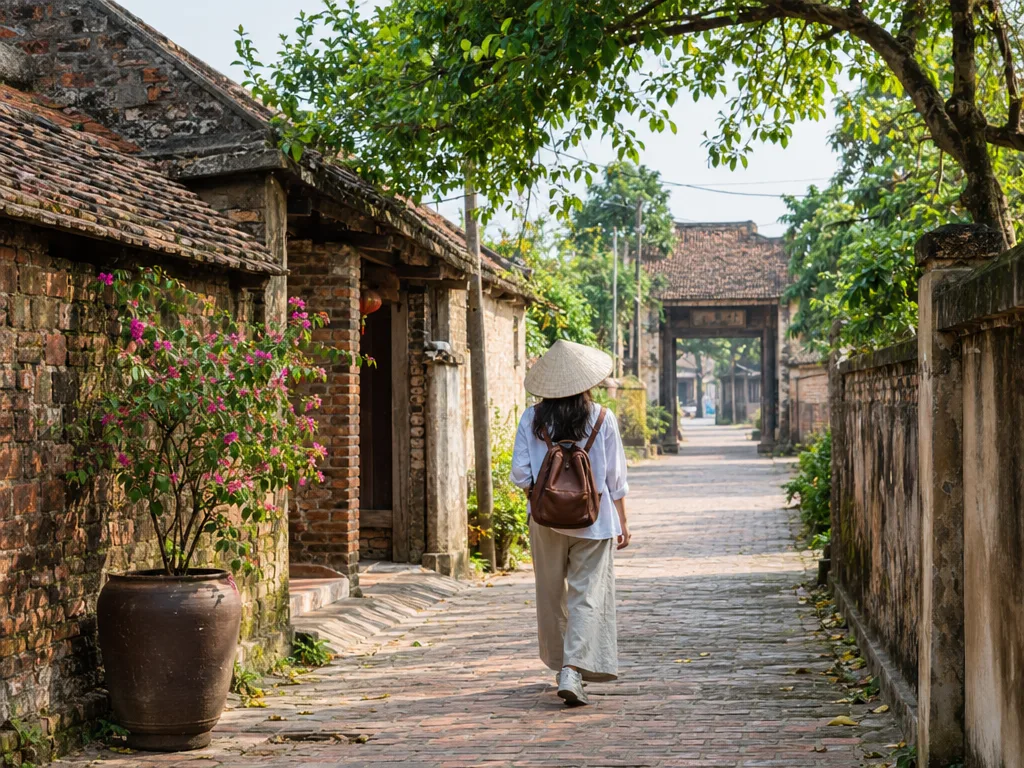
The village is particularly known for traditional northern Vietnamese architecture, including laterite walls, timber frames, tiled roofs, courtyards, and compact lanes. Some homes have been adapted over time, while others preserve older details. Look closely at thresholds, roof lines, ventilation, wells, gates, and the way courtyards connect private life with the lane. These small observations are often more revealing than rushing between named landmarks.
For searchers wondering whether Duong Lam is worth a day trip from Hanoi, the answer depends on your expectations. It suits travellers who enjoy heritage, walking, local food, photography of textures and architecture, and an unhurried countryside atmosphere. It is less suitable if you want a tightly scheduled list of large monuments or a destination where every activity is continuously programmed.
How to plan a Duong Lam route around the village landscape
A useful route has a simple shape: arrive, orient yourself, explore the historic core, pause for food, then add one or two nearby heritage stops before returning. Avoid treating every lane as a race to the next photo. Duong Lam rewards pauses because the details are low-key and the village is experienced at walking speed.
Start with orientation, not a checklist
At the beginning of the visit, identify the main village area, the lanes you want to walk, and a meeting point for your group. If you are travelling independently, confirm current access arrangements and local visitor guidance before setting out. A local guide or host can add context about house layouts, worship spaces, crops, family history, and food that is difficult to understand from signs alone.
Build in a heritage loop
A practical loop can connect Mông Phụ communal house, traditional residential lanes, a few open heritage homes, and village spaces such as wells or gateways. Add Mía Pagoda or another nearby stop only if the timing and energy of your group allow it. The aim is not to collect every possible sight; it is to leave enough time for the village to make sense as a whole.
Leave room for ordinary life
Farmers, residents, shopkeepers, and hosts may be working while you visit. Keep the route flexible around weddings, ceremonies, deliveries, school runs, weather, and private events. If a lane feels crowded or a home is closed, move on rather than pushing for access. A slower itinerary usually produces a better experience and less pressure on residents.
Architecture details worth noticing
Duong Lam’s architecture is easy to photograph but more rewarding to read. Start with materials. Laterite, brick, timber, clay roof tiles, stone thresholds, and plaster each age differently. Weathering, repairs, moss, and uneven surfaces show that preservation is an ongoing process rather than a frozen picture of the past.
Next, notice the courtyard. In a traditional home, the courtyard can connect the entrance, main house, kitchen, garden, storage areas, and family activity. It helps with light, airflow, work, and social life. A host may explain how the house has changed, which rooms remain in use, or how household needs have been balanced with heritage conservation.
Roof lines and gateways also deserve attention. A tiled roof, deep eave, carved timber element, or modest gate can reveal local building habits without needing a grand monument. Look for repeated patterns across several homes rather than assuming one house represents the entire village. Differences between properties are part of the story.
Photography is best when it respects that these are homes, not sets. Ask before photographing people, interiors, family altars, or private courtyards. Avoid standing in doorways, blocking lanes, or directing residents for a picture. Early or late light may be pleasant, but the right time is the time when your presence causes the least disruption.
What to eat in Duong Lam
Food is one of the strongest ways to understand a rural visit, especially when it is served in a family home or small local setting. Rather than looking for a long restaurant list, think in terms of northern village flavours, seasonal produce, rice-based staples, simple vegetables, and preserved or fermented foods. Menus can vary by household and season, so ask what is freshly prepared.
Try local specialities with context
Duong Lam is associated with foods such as chè lam, a chewy sweet made with glutinous rice flour, malt, ginger, and peanuts, and roasted meat dishes prepared for family meals or special occasions. You may also encounter rice products, sauces, pickles, seasonal greens, and home-style dishes that are more meaningful when a host explains how they are made or served.
Do not assume every item is available every day. Ask about ingredients if you have allergies or dietary restrictions, and clarify whether a tasting is included before ordering. If you buy food to take away, choose a reasonable quantity and protect it from heat during the journey. Thoughtful food shopping supports local households without turning the village into a snack stop.
Plan lunch without losing the day
A long lunch can be part of the experience, but it should fit your group. Families with children may prefer an early meal and a quiet break. Walkers may want water, fruit, and a lighter stop before continuing. If you are booking a meal in advance, confirm the menu, timing, dietary needs, and whether the setting is a family home, restaurant, or community venue.
Respectful visiting in a living heritage village
Good etiquette is practical, not ceremonial. Dress comfortably and modestly for homes and religious sites. Speak quietly near altars and communal spaces. Remove shoes when a host or sign asks you to. Do not touch architectural details, ritual objects, crops, or household possessions without permission.
Keep spending local where possible: eat with a resident host, purchase a small food product from a genuine local seller, or pay an agreed guiding or entrance fee through the proper channel. Be wary of bargaining over small amounts when the interaction is personal. Respectful buying is part of the visit, but it should never become an obligation for residents.
Waste, noise, and traffic are the easiest impacts to control. Carry a refillable bottle where practical, take rubbish with you if bins are not available, and avoid loud music or large-group shouting. If arriving by car or coach, follow local instructions and do not block narrow lanes. The village works best when visitors fit into its existing patterns.
When to go and how weather changes the experience
Hanoi and the surrounding north have distinct seasonal shifts. Official Vietnam Tourism guidance describes cooler, sometimes misty conditions from December to March; warmer weather from April to June; hot, humid, rainy conditions during much of June to August; and cooler, clearer weather from September to November. Those broad patterns are useful for planning, but a particular day can still be wet, hot, or overcast.
For walking, check the forecast close to departure and prepare for the actual conditions rather than relying only on an ideal season. In hot weather, start earlier, carry water, rest in shade, and keep the route short. After rain, expect slippery surfaces and puddles on uneven lanes. In cooler or damp weather, comfortable shoes, a light outer layer, and protection for electronics can make a major difference.
Weather also affects photography, food stops, transport, and the comfort of older travellers or young children. A flexible plan is safer than promising a fixed sequence of outdoor stops. If heavy rain arrives, prioritise a meal, a covered heritage home, or an earlier return rather than forcing the full route.
Transport and practical planning from Hanoi
Vietnam Tourism’s transport guidance notes that travellers can use taxis, buses, trains, motorbikes, and bicycles in different parts of the country, with cycling often appealing in rural areas. For Duong Lam, choose the option that matches your confidence, group size, weather, luggage, and ability to navigate smaller roads. A private vehicle can simplify timing for families or groups, while an organised day tour may reduce planning effort.
Confirm the pickup point, journey expectations, vehicle space, return plan, and what is included before booking. If riding a motorbike, only do so if you are properly licensed, experienced, insured, and comfortable with local traffic. Cycling can be enjoyable, but heat, road conditions, and traffic mean it is not automatically the easiest choice.
Carry cash as a backup, but do not assume every seller accepts the same payment methods. Bring sun protection, water, comfortable walking shoes, insect protection if useful, and a small bag for purchases. Save offline details for your accommodation and driver, and agree on a clear meeting point before exploring separate lanes.
A calm one-day Duong Lam itinerary
Use the following framework rather than a rigid timetable:
- Travel from Hanoi and arrive with enough time to orient yourself.
- Walk through the historic core, noticing materials, courtyards, gateways, and daily life.
- Visit Mông Phụ communal house or another appropriate heritage stop with quiet attention.
- Take a seated break and learn about local food, architecture, or family history from a host or guide.
- Have lunch at a confirmed local setting, allowing extra time for preparation.
- Add Mía Pagoda or one nearby stop only if your group still has energy.
- Buy a small local food product, review the return plan, and leave without rushing the final walk.
This structure works because it protects the core experience: observation, conversation, food, and respectful movement through a real community. If your group includes children, older travellers, or anyone with limited mobility, reduce the number of stops and prioritise seating, shade, toilets, and a dependable vehicle plan.
Final advice for a rewarding visit
The best Duong Lam Ancient Village day trip is not the one with the most stops. It is the one that gives you enough time to see how architecture, food, worship, agriculture, and family life share the same landscape. Plan the route, confirm current arrangements, watch the weather, and leave space for local guidance. Most importantly, remember that Duong Lam is a home for residents first and a destination for visitors second.
JOIN THE CONVERSATION
Comments (0)
No comments yet. Be the first to share a thought.