Duong Lam Ancient Village is best approached as a living neighbourhood rather than a single attraction to be ticked off. The village area in Son Tay, Hanoi, is known for old lanes, traditional houses, communal spaces, family homes, temples, and the everyday rhythm of residents who still live there. That makes a visit rewarding, but it also means the most successful Duong Lam Ancient Village day trip leaves room for quiet observation and respectful behaviour.
This guide explains how to shape a practical route from Hanoi, what to look for, how much time to allow, what to eat, and how to avoid the common mistake of rushing from one photo stop to the next. It is designed for independent travellers and anyone comparing a private or small-group excursion.
Why Duong Lam works as a day trip from Hanoi
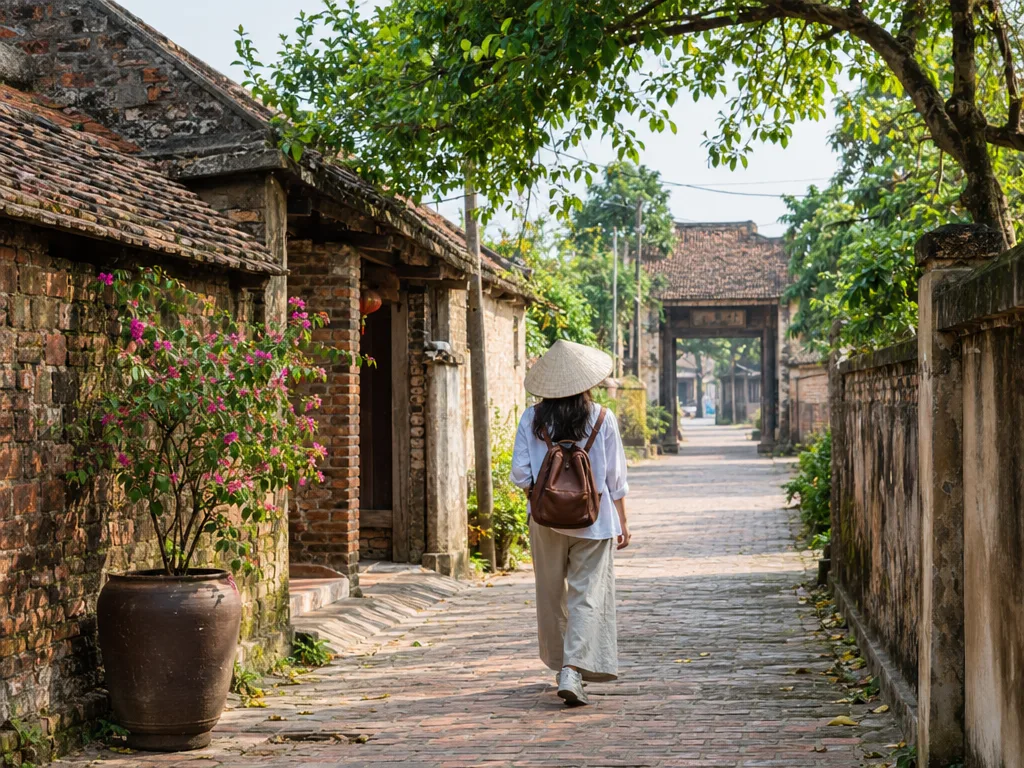
The appeal of Duong Lam is its sense of continuity. Instead of presenting heritage behind glass, the village brings together domestic architecture, worship spaces, lanes, gardens, and working households. You can move from a shaded entrance lane to a courtyard, then hear a conversation or see ordinary household activity. The contrast with Hanoi’s busy centre is part of the experience.
It is also a useful choice when you want a Hanoi countryside tour with cultural depth rather than a long list of attractions. The route does not depend on a packed timetable. A slower visit gives you time to notice walls, doorways, rooflines, wells, trees, cooking smells, and the relationship between public and private space.
Before you go, check the destination listing and route conditions rather than assuming every facility operates on the same schedule. The live Google Maps listing identifies Duong Lam Ancient Village in Son Tay, Hanoi, and provides a destination pin and the village website for confirmation. The official Vietnam Tourism site is also useful for broader planning around culture, heritage, and travel in Vietnam.
How to plan the route from Hanoi
Choose transport around your priorities
A private car or organised private day tour is the simplest option if you want to control departure time, stop for lunch, and avoid piecing together several local connections. It is especially useful for families, older travellers, or anyone travelling with limited time. A driver can drop you near the part of the village you want to explore, while you keep the walking portion flexible.
Independent travellers may prefer a combination of public transport and a short local transfer, but this requires more preparation. Check the latest route information on the day, allow buffer time, and save the destination name in both English and Vietnamese: Làng cổ Đường Lâm. Do not build an itinerary around an exact connection unless you have verified it with the operator or a reliable local source.
Allow more time than the map suggests
Travel time from central Hanoi varies with your starting point and traffic. Treat the outward journey as a planning estimate, not a fixed promise. A useful rule is to protect a substantial middle block for the village itself, then keep the return journey open. A rushed arrival followed by a rushed departure turns a heritage visit into a transfer exercise.
For a realistic day, plan one main village walk, a meal or snack break, and time for unplanned discoveries. If you want a second countryside stop, choose one only after deciding how deeply you want to explore Duong Lam. Travellers who enjoy photography, architecture, or food usually need longer than visitors who only want a quick overview.
A practical Duong Lam Ancient Village walking route
Begin with orientation, not photographs
Start by getting your bearings. Look at the village pattern, identify the main public spaces, and decide whether you will follow a local guide or explore independently. This first pause helps you understand that the lanes connect homes and community buildings rather than forming a theme-park circuit.
Walk slowly through the older lanes and pay attention to materials and proportions. Laterite walls, timber details, tiled roofs, courtyards, and shaded thresholds are often more revealing than a single famous building. Notice how the architecture responds to heat, rain, work, worship, and family life.
Visit shared heritage spaces respectfully
Continue towards communal and religious spaces that are open to visitors. These places may feel quieter than the lanes, but they are not simply photo backdrops. Dress modestly, lower your voice, follow signs, and observe whether local worship or community activity is taking place. If you are unsure whether a doorway or courtyard is open to visitors, ask before entering.
Leave room for village life
After the main stops, take a less hurried walk. Look for small details: a craft object, a courtyard garden, a traditional food preparation area, or a resident maintaining a home. Some of the strongest memories come from the spaces between listed attractions. Keep your group together without blocking narrow lanes, and avoid photographing people closely unless they have clearly agreed.
What to see beyond the headline sights
Many online guides concentrate on the idea of an “ancient village” but fail to explain how to read it. Duong Lam is more rewarding when you divide your attention into four layers.
- Architecture: compare entrances, walls, roofs, courtyards, and the relationship between the street and the home.
- Community: notice communal buildings, temples, wells, trees, and the spaces where village life gathers.
- Household traditions: look for food, gardens, family shrines, and objects that remain part of domestic life.
- Landscape: observe the transition between built lanes, farmland, ponds, trees, and the wider Son Tay countryside.
This approach gives you a stronger experience than collecting a checklist of named buildings. It also helps children understand that heritage is not only about age. It is about how places are used, cared for, adapted, and passed on.
For additional perspective, read Visiting Duong Lam with Care for a Living Heritage Village before you travel. It complements this route by focusing on the responsibilities that come with visiting a lived-in heritage environment.
Food and breaks during the visit
Food should support the rhythm of the day rather than become another rushed appointment. Look for a local meal, a small snack, or a drink break that allows you to sit, cool down, and review the route. Rural meals may be simple and seasonal, so arrive with realistic expectations and ask what is available instead of assuming a fixed menu.
If you eat in a household or small local venue, be clear about what you are ordering and whether the meal is prepared for your group. Carry water, especially in warmer weather, and bring a reusable bottle where practical. Narrow lanes and uneven surfaces make it inconvenient to manage too many bags, so pack lightly.
Food is also a chance to connect the village to Hanoi’s wider culinary landscape. If your trip is part of a broader food-focused itinerary, compare the unhurried village meal with the city experiences described in a Hanoi countryside tours plan. The contrast can help you choose between a culture-first day and a day organised around dining.
Heritage etiquette: how to visit without intruding
Duong Lam is a destination where good manners directly improve the experience. Residents are not performers, and private homes are not automatically public attractions. Stay on routes that appear open, ask before entering, and do not touch architectural details or household objects without permission.
- Dress comfortably but respectfully, particularly when entering temples or communal spaces.
- Keep voices low near homes, shrines, worshippers, and older residents.
- Ask permission before photographing people, interiors, ceremonies, or food preparation.
- Do not block entrances, narrow lanes, or motorbike access while taking photographs.
- Take rubbish with you and use available bins rather than leaving packaging behind.
- Buy directly from local makers or hosts when you genuinely want an item; do not pressure people to pose or sell.
The most useful mindset is simple: observe first, photograph second. If a moment looks intimate, domestic, or ceremonial, let it remain private. This is not only ethical; it also keeps the village atmosphere intact for the people who live there and for future visitors.
Who will enjoy this day trip?
Travellers interested in culture and photography
Duong Lam suits travellers who enjoy texture, detail, and atmosphere. It rewards a camera, but it does not require specialist historical knowledge. A guide can add context about architecture and local customs, while independent visitors can create their own visual story by walking slowly and revisiting details.
Families and mixed-age groups
Families can enjoy the open-air setting, food stops, and variety of short walks, but a full-day itinerary should not become a forced march. Build in shade, seating, snacks, and a clear meeting point. Children often engage more readily when given a small observation task, such as finding different roof shapes or identifying how a courtyard is used.
For more planning ideas, see Choosing a Day Trip the Whole Family Can Enjoy. The wider family-friendly day trips category can also help you compare Duong Lam with destinations that offer more formal attractions or outdoor space.
Travellers choosing between guided and independent visits
A guide is valuable when you want stories, translation, and help identifying what is private or significant. Independent travel works when you are comfortable navigating, researching in advance, and accepting a looser structure. A private tour makes particular sense for first-time visitors who want to combine Duong Lam with another nearby stop without spending the day managing logistics; compare the considerations in When a Private Day Tour Makes Sense.
What to pack and what to confirm before leaving
Good preparation is modest but important. Wear shoes suitable for uneven lanes and bring sun protection, water, and a small amount of cash if you expect to buy food or handmade goods. A light rain layer is useful during unsettled weather. Keep phones charged, save the destination name offline, and carry the address or map pin in case you need to show it to a driver.
Before departure, confirm the current destination listing, the route from your accommodation, and whether any specific site or meal stop requires prior arrangement. Opening hours, local services, road conditions, and seasonal activities can change. The Google Maps listing currently identifies the village location and links to its website, but you should still verify time-sensitive details shortly before travel.
Do not overpack the itinerary. The best Duong Lam Ancient Village day trip has a clear arrival plan but a flexible middle. If you have already visited several museums or formal monuments in Hanoi, the village may be most rewarding when treated as a slower change of pace rather than another sequence of interiors.
How Duong Lam fits a wider Hanoi itinerary
Duong Lam can stand alone as a heritage-focused day trip, or it can form part of a broader countryside plan. Use it as the cultural anchor and add another stop only if the journey remains comfortable. The day trip planning and comparisons category is useful when you are weighing travel time, walking intensity, food, and guide support across several options.
It also pairs conceptually with other craft and village experiences, although each destination has a different character. A pottery-focused outing, for example, is more activity-led, while Duong Lam is strongest for architecture, community, and atmosphere. Read A Half-Day Visit to Bat Trang Pottery Village if you are deciding whether your group would prefer hands-on making or a slower heritage walk.
Keep the final decision tied to your group’s energy and interests. A shorter, attentive visit is better than adding distant stops that leave everyone tired and unable to appreciate the village.
Final thoughts
A Duong Lam Ancient Village day trip works best when you plan the transport carefully, protect enough time for walking, and treat the destination as a living community. Look beyond the most photographed buildings, take a considered food break, and let local etiquette shape your pace. With those choices, Duong Lam becomes more than a quick escape from Hanoi: it becomes a thoughtful encounter with heritage that is still part of everyday life.
JOIN THE CONVERSATION
Comments (0)
No comments yet. Be the first to share a thought.