A Duong Lam village day trip is less about ticking off monuments and more about learning how an old rural settlement still works as a living community. The village west of Hanoi is known for laterite walls, narrow lanes, timber houses, communal spaces, temples, and family homes that are part of everyday life rather than a staged museum set. That makes it rewarding, but it also means the best visit needs a little more care than a quick photo stop. This guide explains how to shape a realistic route, what to look for, how to behave around residents, and when Duong Lam is a better choice than another Hanoi excursion.
Why choose Duong Lam for a day trip from Hanoi?
Duong Lam suits travellers who want cultural context at a slower pace. The experience is walking through a cluster of villages, pausing at gateways and courtyards, and noticing how architecture, agriculture, worship, food, and family life fit together. It is very different from a single attraction where every minute follows a fixed sequence.
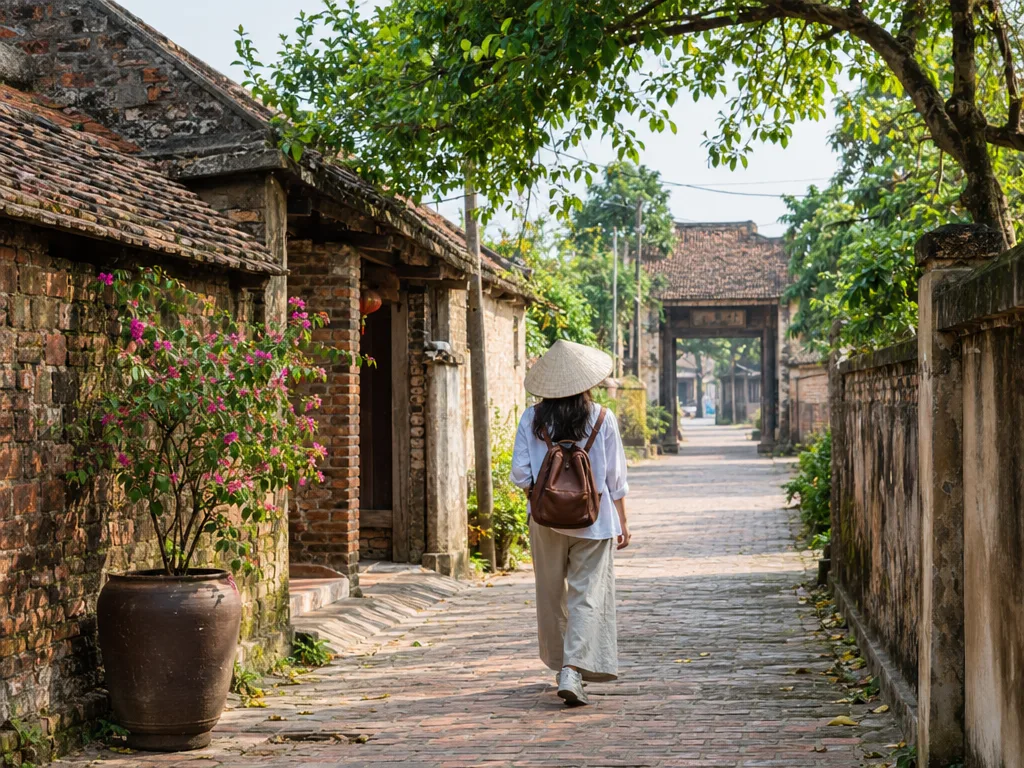
The central appeal is the relationship between buildings and landscape. Laterite, old brick, tiled roofs, banyan trees, ponds, gardens, and lanes create a visual language that feels distinctly northern Vietnamese. Mong Phu is usually the starting point for first-time visitors, while other hamlets and sites make the outing feel broader than one preserved street. You do not need to see every lane to understand the place; a thoughtful half-day can be more satisfying than a rushed checklist.
Duong Lam is also a useful choice when you have already seen Hanoi’s urban highlights. For comparisons with other excursions, see How to Compare Day Trips from Hanoi. The village works particularly well for visitors interested in Vietnamese heritage, photography, local food, architecture, and gentle walking rather than high-intensity sightseeing.
How to plan the route before you leave Hanoi
Allow enough time for the road and the village
Duong Lam is close enough to visit in one day, but “close to Hanoi” does not mean the journey will take exactly the same time every day. Traffic, weather, and your starting point can change the road experience. A private car or organised tour usually makes the timing easier to manage, while a self-planned journey requires more attention to the final local connection and return window. Avoid building a tightly packed itinerary around a second attraction on the opposite side of the city.
A comfortable plan is to leave Hanoi in the morning, walk through the heritage area before the strongest afternoon heat, pause for lunch, and return without forcing a late finish. If you want a longer countryside day, combine Duong Lam only with a nearby, clearly defined stop rather than adding several distant sights. The broader Hanoi Countryside Tours category can help you compare the pace and character of alternatives.
Choose transport around your priorities
- Private car: best when you value a flexible departure, door-to-door convenience, or extra time for photography and conversation.
- Organised day tour: useful when you want transport, interpretation, and a route arranged in advance.
- Motorbike: appealing to confident riders who are comfortable navigating changing traffic and rural roads; it is not the right choice for everyone.
- Public transport: possible in principle, but it may involve more changes and walking than a first-time visitor expects. Check current routes locally rather than relying on old blog timetables.
Whatever you choose, confirm the actual pickup point, return arrangements, luggage space, and whether entrance or local guiding costs are included. Do not assume an online description reflects today’s operating details.
A realistic Duong Lam walking route
Begin with the village entrance and Mong Phu
Start by slowing down. The entrance area and approach lanes help you understand that Duong Lam is a settlement, not a theme park. Look at the transition from modern roads to smaller lanes, the way walls define private courtyards, and the changing sounds as traffic gives way to household activity. Mong Phu communal house is an important orientation point because communal architecture connects local history, worship, and village identity.
Take time to observe materials rather than only collecting landmark photographs. Laterite blocks have a warm, irregular surface; tiled roofs, wooden beams, and shaded courtyards create a different rhythm from Hanoi’s dense streets. Ask permission before entering a home, temple, workshop, or courtyard. Some places welcome visitors, while others remain private even when their architecture appears historic.
Continue through lanes, homes, and food stops
After Mong Phu, follow the lanes at an unhurried pace. A useful route alternates between public heritage points and quiet residential sections. This prevents the visit from becoming a string of disconnected stops. Watch for wells, gates, garden edges, rooflines, and family businesses. The small details often explain village life better than a long list of dates.
Lunch can be simple and local. Look for dishes and snacks associated with northern village cooking, but choose a host or restaurant that can explain what is being served. Rice-based foods, seasonal vegetables, chicken, tofu, and local sweets may appear depending on the household and the day. If you have allergies or dietary restrictions, communicate them clearly before ordering. Carry water, especially in hot weather, because shade is uneven and some lanes have limited services.
Add a temple or pagoda only if the pace remains comfortable
Mia Pagoda and other religious sites are often included in Duong Lam itineraries, but they should be approached as places of worship first and visitor attractions second. Dress modestly, lower your voice, avoid blocking entrances, and follow any photography instructions. A guide can add valuable context, yet you can still appreciate the proportions, courtyards, trees, and atmosphere without turning every moment into a performance.
What to notice in the architecture and landscape
Duong Lam rewards close observation. Instead of asking only “What is the oldest building?”, consider how each feature served a practical and social purpose.
- Laterite walls: their colour and texture are among the village’s most recognisable visual elements.
- Courtyards: these create a buffer between the lane and the house and often support domestic work.
- Roof forms: tiled roofs, deep eaves, and timber structures show how buildings respond to rain, heat, and family use.
- Communal buildings: these express shared identity and ritual rather than private household life.
- Gardens and ponds: they connect the built settlement with food production, shade, drainage, and seasonal change.
Do not treat “ancient” as a promise that every structure is untouched or that every object has a single certain date. Villages evolve. Repairs, additions, and new household needs are part of the story. The strongest article about Duong Lam is not a claim that everything is frozen in the past, but an explanation of how heritage survives while residents continue to live there.
How to visit a living heritage village respectfully
Respect is not an optional extra in Duong Lam; it is the condition that makes the visit possible. People live, work, worship, study, and rest in the spaces visitors photograph. Keep voices low near homes and religious buildings. Never enter a private area because a door is open. Ask before photographing residents, children, family altars, meals, or workspaces.
Stay on lanes and paths where visitors are welcome. Do not climb walls, lean on fragile gates, move household objects, or place cameras inside rooms without permission. If a resident offers tea or a demonstration, accept only if you can participate politely and without turning the interaction into an unpaid photo prop. Buy food or crafts when you genuinely want them, but do not pressure a household to sell or perform.
Waste is especially noticeable in a rural heritage setting. Carry a small bag for rubbish when bins are not nearby, avoid single-use plastic where practical, and leave plants, stones, tiles, and decorative details where they are. These simple actions support the same principle as choosing a slower route: the village should remain a home after your visit ends.
When is the best time to visit?
There is no single perfect month for everyone. Cooler, drier periods are generally more comfortable for walking, while hotter months make an early start and regular shade breaks more important. Rain can change the character of the lanes and make surfaces slippery, so wear shoes with grip rather than delicate city footwear.
Weekdays may feel calmer than weekends, but local life does not stop simply because visitor numbers are lower. Festivals, holidays, harvest periods, school schedules, and family events can alter what you see. Treat unusual activity as part of the village calendar rather than assuming it is staged for tourists. If your trip is built around a specific festival, verify the date and access arrangements with a current local source before travelling.
For photographers, morning light can suit walls and rooflines, while late afternoon gives courtyards a warmer mood. Avoid making photography the only purpose of the visit. A shaded conversation, a careful look at a doorway, or a quiet lane without a dramatic image may be the most memorable part of the day.
Who will enjoy Duong Lam most?
Duong Lam is a strong fit for couples, solo travellers, families with older children, architecture enthusiasts, and anyone who prefers cultural immersion to a packed attraction schedule. Children often enjoy the lanes, courtyards, snacks, and open spaces, but adults should explain why they must not touch household objects or enter private areas. Families comparing options can also browse Family-Friendly Day Trips for a different range of pacing and activity levels.
Visitors with limited mobility should discuss the route in advance. Uneven surfaces, narrow lanes, steps, heat, and limited seating can affect comfort. A private vehicle, shorter walking plan, and planned rest stops may make the experience more manageable. If you prefer a guide who can adapt the day around your interests, read When a Private Day Tour Makes Sense before booking.
Duong Lam may be less suitable if you want dramatic natural scenery, continuous entertainment, or a timetable packed with major monuments. In that case, compare the village with a nature-focused option such as Ba Vi Nature Trips. The right choice depends on whether you want to understand a place through its living culture or spend more of the day outdoors.
Common planning mistakes to avoid
- Trying to see everything: a shorter, attentive route is better than rushing between every named site.
- Using old practical information: prices, opening arrangements, transport, and access rules can change; verify them close to your visit.
- Assuming every old house is public: historic appearance does not remove private boundaries.
- Ignoring the weather: heat and rain affect walking comfort more than a map suggests.
- Booking only for photographs: staged expectations can lead to intrusive behaviour and disappointment.
- Leaving the return too late: rural traffic and city congestion can make the final journey slower than expected.
A good preparation list is short: comfortable shoes, sun protection, water, modest clothing for religious sites, a charged phone, and a flexible attitude. If you are visiting independently, save your accommodation address and return plan offline.
Conclusion: make Duong Lam a slower day
The best Duong Lam village day trip leaves room for observation. Walk beyond the obvious gate, listen before photographing, ask before entering, and let the village’s ordinary details explain its heritage. With a sensible route, realistic transport expectations, and respectful behaviour, Duong Lam becomes more than an easy excursion from Hanoi: it becomes a thoughtful introduction to how northern Vietnamese community life, architecture, belief, and countryside remain connected.
JOIN THE CONVERSATION
Comments (0)
No comments yet. Be the first to share a thought.