Bat Trang Village is one of the easiest cultural escapes from Hanoi: close enough for a half-day, but rich enough to reward a slower visit. The village is known for its long pottery tradition, working workshops, small lanes, ceramic displays, and a market where everyday tableware sits beside decorative pieces. A good Bat Trang Village day trip is not simply a shopping stop. It is a chance to understand how clay, craft, family businesses, and local commerce fit together.
This guide explains how to plan the visit, what to do beyond browsing shelves, how to choose between transport options, and how to build a route that feels useful rather than rushed. For a quick overview of the shorter format, start with our half-day Bat Trang pottery village guide, then use the itinerary below when you want more time for making, eating, and exploring.
Why choose Bat Trang for a day trip from Hanoi?
Bat Trang works well when you want culture without committing to a long journey. Unlike a destination built around one monument, the village is a living craft area. The experience comes from moving between workshops, display rooms, lanes, food stops, and the market. You can watch artisans shape or decorate ceramics, try a hands-on pottery activity, compare glazes, and choose a piece that is practical rather than merely ornamental.
The village also suits different travel styles. Couples can combine browsing with a quiet meal. Families can turn the visit into a tactile activity where children make something with their hands. Photographers will find textures in kilns, courtyards, stacked bowls, painted surfaces, and narrow streets. Travellers with limited time can focus on a workshop and the market, while a full-day visit allows more unplanned wandering.
Expect a working community, not a museum arranged entirely for visitors. Some lanes are busy, shop layouts vary, and opening arrangements can change. That is part of the character of the place, but it also means you should leave flexibility in the schedule and confirm any booked workshop directly.
How much time should you allow?
A half-day visit
A half-day is enough for a first introduction. Allow travel from Hanoi, a pottery activity or workshop visit, time in the market, and a simple meal or drink. This format is best if you are combining Bat Trang with another Hanoi plan or if shopping is your main purpose. Keep the route focused: choose one making experience, walk a small area, and avoid trying to inspect every shop.
A relaxed full day
A full day gives the village room to unfold. You can begin with a workshop before the busiest part of the day, take a break for lunch, browse at a slower pace, and return to a favourite shop before leaving. The extra time is valuable if you are travelling with children, want to buy fragile pieces, or prefer to compare products carefully.
Build the day around energy rather than a strict checklist. Pottery activities are hands-on and shopping can become tiring, so alternate focused stops with walking, food, and rest. For broader route-planning principles, see how to compare day trips from Hanoi before deciding whether Bat Trang is the right fit for your schedule.
A practical Bat Trang itinerary
Morning: arrive and start with the craft
Arrive with enough time to orient yourself before shopping. Begin with a workshop, pottery class, or artisan visit rather than leaving it until the end. The creative activity gives the day a clear focus and helps you see the finished goods with more understanding. Ask what the activity includes, whether the piece can be taken away immediately, and how any drying, firing, or collection process works. Do not assume that every item made during a visit will be ready to carry home.
After the workshop, walk through nearby lanes without rushing. Look for differences in form, colour, surface, and decoration. A useful way to browse is to choose a purpose first: a small bowl, tea cup, serving dish, ornament, or gift. This reduces impulse buying and makes it easier to compare quality and size.
Midday: eat simply and protect your time
Plan lunch as a pause, not another major attraction. Local food options and opening arrangements can vary, so keep the choice flexible rather than relying on an unverified menu or fixed timetable. If you have dietary requirements, carry a small backup snack and communicate clearly. Leave room after lunch for packaging and transport decisions; fragile ceramics need more attention than ordinary souvenirs.
Afternoon: market, final purchases, and a slower walk
Use the afternoon for the market and final comparisons. The market is useful for seeing the range of products in one place, but the cheapest item is not automatically the best value. Check for hairline cracks, uneven rims, rough bases, unstable handles, or decoration that differs from the display model. Ask how the item should be packed and whether it is suitable for checked luggage or hand luggage.
Before leaving, revisit only the shops or workshops that genuinely interested you. This final pass is better than carrying a heavy first purchase all day or buying something simply because you feel you should. Keep receipts or shop details for higher-value pieces, and photograph the packed parcel if you are buying several items.
Transport choices from Hanoi
Your best transport option depends on group size, comfort, and how much independence you want. A private car or taxi is straightforward for families and for travellers buying ceramics, because it reduces carrying and allows a more direct return. Ride-hailing may be convenient, but confirm the pickup point and vehicle access before you start walking through smaller lanes.
Public transport can suit independent travellers who are comfortable with a less direct journey and a little more walking. Check the route on the day rather than relying on an old blog timetable. Routes, stops, traffic conditions, and service patterns can change. If you are carrying fragile pieces, a vehicle with a predictable pickup is usually less stressful than changing transport late in the day.
Private tours can add value when you want local interpretation, workshop coordination, or help combining Bat Trang with another stop. They are especially practical for multi-generational groups. Compare what is actually included: transport, workshop fees, meals, guide time, waiting time, and delivery or packing arrangements. The wider advice in when a private day tour makes sense can help you judge whether the added structure is useful for your party.
What to do in Bat Trang besides shopping
Try a pottery-making activity
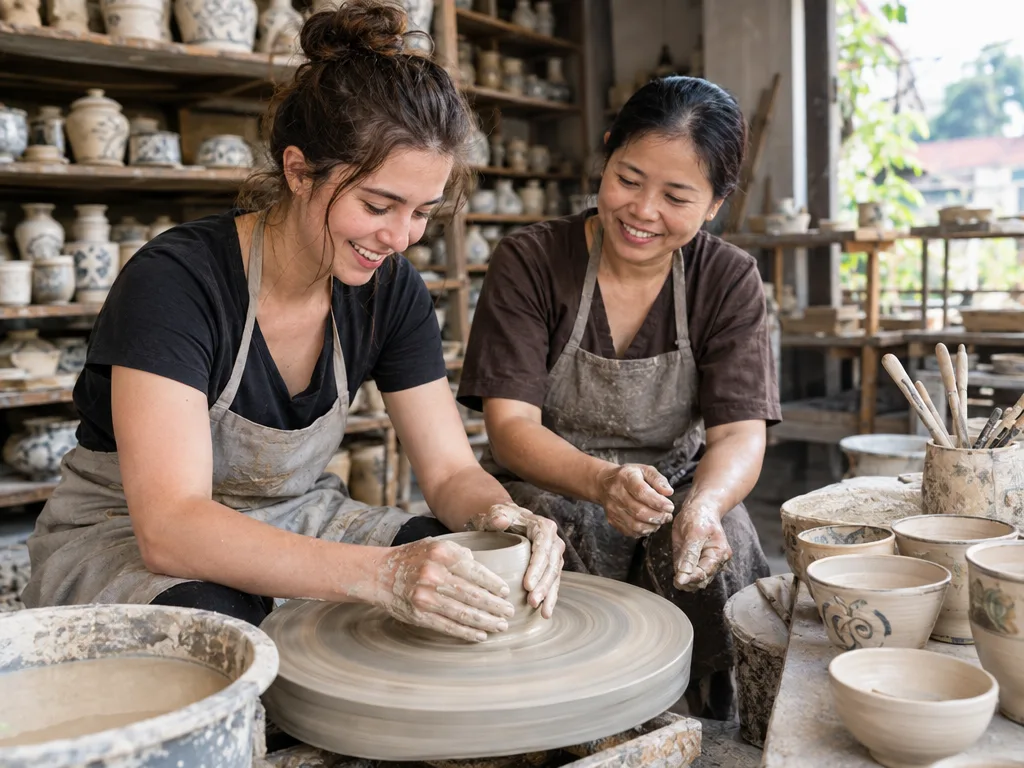
Making pottery is the most memorable way to connect the visit with the village’s identity. The value is not producing a perfect object; it is feeling how quickly clay responds to pressure, water, speed, and balance. Let the instructor guide you, and expect the result to look handmade. Ask about collection, firing, and delivery before you begin.
Observe working craft spaces
Where access is permitted, watch how pieces move through stages such as forming, drying, decorating, glazing, and firing. Be respectful of work areas: ask before photographing people, tools, or unfinished orders, and do not touch pieces that are set aside. A working workshop is not a stage set, and a little patience makes the interaction more comfortable.
Explore ceramic design
Notice how the same object changes through shape, glaze, brushwork, and firing. Blue-and-white decoration is only one visual language; modern pieces may be restrained, colourful, minimalist, or designed for daily use. If you are buying gifts, consider whether the recipient values a useful object, a decorative object, or a small piece that tells the story of the village.
Look beyond the main market
Small streets and individual workshops can reveal more than a quick market circuit. Walk slowly, but stay aware of traffic, scooters, loading activity, and uneven surfaces. Do not enter private courtyards or workspaces without an invitation. The village is best experienced as a community with visitors, not as a backdrop that exists only for photography.
Buying ceramics: quality, packing, and responsible choices
Start by checking function. A cup should sit securely, a bowl should have a stable base, and a lid should fit its matching vessel. Run your eyes around the rim and handle, looking for chips or fine cracks. For decorative pieces, inspect the back and underside as carefully as the front. Variation can be part of handmade character, but damage and poor construction are different things.
Ask whether a piece is intended for food use, heat, washing, or display only. Do not assume that an attractive glaze has the same care requirements as plain tableware. If the seller cannot explain the use clearly, choose another item or treat it as decorative.
Packaging matters. Request protective wrapping, keep pieces separated, and avoid putting heavy objects on top of delicate ones. If you are travelling onward, carry the package upright where possible and keep it away from loose items in a suitcase. For several purchases, ask whether the shop can consolidate and label the parcel. Never promise yourself that a fragile item will be safe simply because it survived the journey from the shop to the car.
Tips for families, older travellers, and first-time visitors
Families should book or confirm the making activity early in the day, when attention is usually better. Wear clothes and shoes that can handle clay or dust, and keep expectations realistic: children may enjoy the process more than the final object. A short workshop, snack break, and limited shopping loop is often more successful than a long march through every lane. The family-planning ideas in our guide to choosing a family-friendly day trip are useful when balancing ages and energy levels.
Older travellers should prioritise vehicle drop-off planning, seating, shade, and a route with fewer unnecessary crossings. Ask the driver or guide where the most practical meeting point is, and keep the return plan clear. For everyone, comfortable shoes, water, sun protection, and a small bag for purchases make the visit easier without turning it into an over-equipped expedition.
How Bat Trang fits a wider Hanoi itinerary
Bat Trang is strongest as a focused craft excursion, not as a rushed add-on to a distant destination. Pair it with another nearby or city-based plan only when travel time remains reasonable. If your priority is quiet rural scenery, compare it with the options in Hanoi Countryside Tours. If you are travelling with children and want more activity ideas, browse Family-Friendly Day Trips. For heritage-focused alternatives, Duong Lam Ancient Village offers a different kind of living cultural landscape.
Keep the purpose of the day clear. Bat Trang is a good choice when you want to make, learn, browse, and take home something connected to a local craft tradition. It is less suitable if you want a dramatic landscape, a long list of major monuments, or a tightly timed attraction-hopping day.
Final planning checklist
- Choose half a day or a relaxed full day before booking transport.
- Confirm workshop arrangements, collection details, and any extra fees directly.
- Wear comfortable clothes and shoes suitable for clay, dust, and uneven lanes.
- Decide what kind of ceramic you want before browsing widely.
- Inspect rims, bases, handles, and glaze before paying.
- Ask for protective packing and keep fragile pieces separate on the journey home.
- Ask permission before photographing people or working areas.
- Keep the return pickup point and timing clear, especially after shopping.
Conclusion
A Bat Trang Village day trip is most rewarding when you treat it as a living craft experience rather than a quick souvenir run. Start with making or observing, leave time for a thoughtful market walk, buy with care, and allow the village’s pace to shape the itinerary. With a realistic route and a little flexibility, Bat Trang offers an accessible cultural day from Hanoi that is hands-on, practical, and memorable.
JOIN THE CONVERSATION
Comments (0)
No comments yet. Be the first to share a thought.