
Duong Lam ancient village is one of the most rewarding countryside day trips from Hanoi when you want history and everyday village life rather than a packed attraction list. The area is a living heritage landscape: old lanes, communal spaces, historic houses, fields, shrines, food traditions, and residents sharing the same setting. That changes how you plan the visit. Allow time to walk, notice architectural details, eat something local, and behave like a guest in a neighbourhood.
This guide explains how to shape a realistic Duong Lam day trip, what to prioritise, how to connect the main heritage sites, and which assumptions to avoid. It also pairs with A Countryside Escape from Hanoi at an Unhurried Pace and the destination-planning advice in Hanoi Countryside Tours.
Why Duong Lam works as a Hanoi day trip
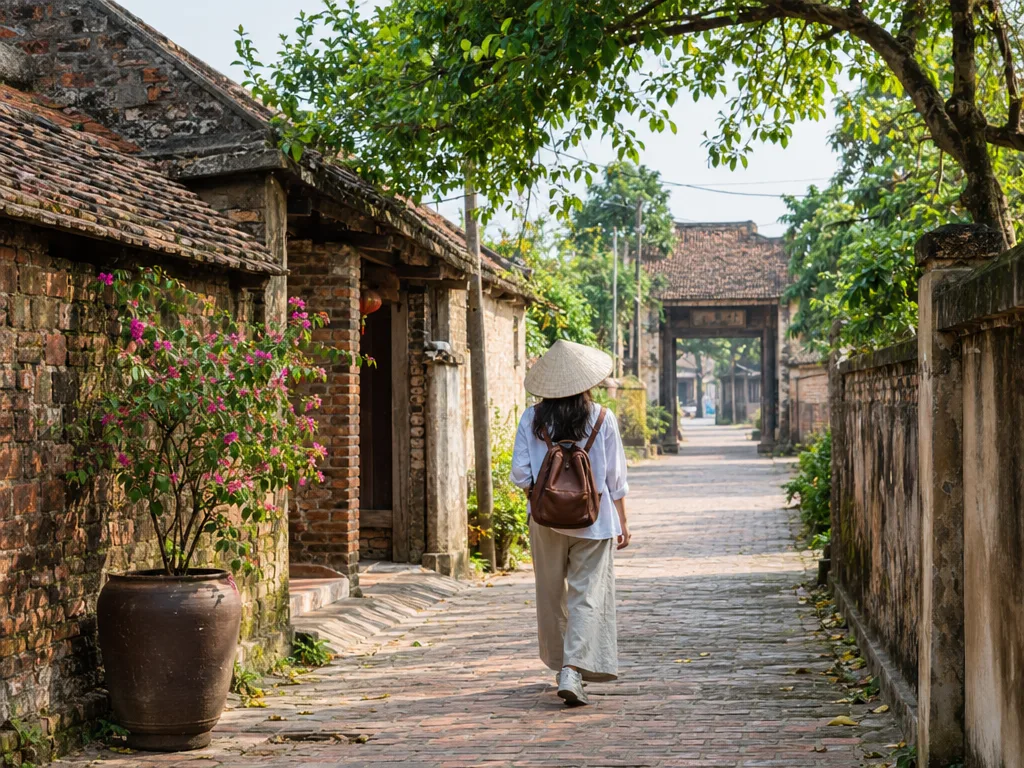
Duong Lam is close enough to fit a full day from Hanoi, but its appeal is not simply convenience. The destination preserves a recognisable Red River Delta village pattern, including lanes, a village gate, communal architecture, wells, trees, fields, and traditional houses. VietNamNet describes the village as around 44 kilometres from central Hanoi and notes its laterite-built houses and surviving rural features. The heritage is distributed through a settlement rather than contained in one museum.
The area is associated with several historical figures and is often called the “land of two kings” because of its connection with Phùng Hưng and Ngô Quyền. That history gives the trip a strong narrative, but it should not turn the village into a backdrop for hurried sightseeing. Combine famous landmarks with quieter observations: a doorway, courtyard, well, roofline, or lane still serving an ordinary household.
If you are comparing destinations, start with How to Compare Day Trips from Hanoi. Duong Lam suits travellers who value cultural texture, walking, photography, and a slower pace more than dramatic scenery or a tightly scheduled activity list.
Build a route around the village’s heritage spaces
A good Duong Lam itinerary is a connected walk, not a checklist. Begin with the village entrance or main historic cluster, then move through the lanes before spending longer at important communal and religious sites. The exact order depends on your drop-off point and what is open, so treat this as a planning structure rather than a promise of current hours.
Start with the village approach
Pause before entering the core area. Notice how the road, trees, walls, and houses create a transition from the modern approach into the older settlement. A village gate and the surrounding landscape help explain that Duong Lam is a network of hamlets and heritage spaces, not one reconstructed street. Starting slowly also lets you adjust your behaviour before reaching homes and family-run places.
Prioritise Mông Phụ
Mông Phụ is a strong starting point for first-time visitors because it brings together recognisable elements of the traditional village environment. The communal house, lanes, old houses, and public spaces show how community life once organised itself around shared buildings and local routes. Look beyond the most photographed façade: notice the relationship between courtyard, roof, doors, walls, and lane.
Add religious and historical sites selectively
Mía Pagoda, Phùng Hưng Temple, and the Ngô Quyền Mausoleum are commonly included in a wider visit. You do not need to treat every site as a separate major stop. Someone drawn to architecture may want more time around the communal house and pagoda; someone interested in history may prefer to connect places associated with local figures. Leave margin for walking and unplanned discoveries.
What makes the architecture distinctive
Duong Lam’s built environment is valuable because individual details work together. Laterite blocks, timber frames, tiled roofs, courtyards, gates, and narrow lanes create a visual language that differs from Hanoi’s urban streets. The village is also known for a fishbone-like road layout, in which routes branch from communal areas rather than forming a modern grid. You do not need specialist knowledge to appreciate it. Ask simple questions: Is this space public or private? Does the house open toward the lane or an inner courtyard? Which surfaces show age, repair, or adaptation?
Historic houses are still homes, not exhibits. A doorway may lead to a family’s living space, kitchen, or small business. Avoid entering without an invitation, keep voices low, and ask before photographing people or interiors. If a host welcomes you inside, listen to the explanation instead of turning the visit into a quick transaction.
For a wider perspective on responsible heritage travel, read Visiting Duong Lam with Care for a Living Heritage Village. This guide focuses on shaping the day, while that article keeps the living-community context at the centre.
Allow time for food and local products
Food is part of the cultural character of a Duong Lam day trip, not merely a convenient lunch break. The area is associated with tương, a fermented soybean sauce, and sweets such as chè lam and peanut-based candies. These products connect the visit to household knowledge and local tastes. Availability varies, so build your plan around what is actually being served rather than expecting a fixed menu.
How to eat thoughtfully
Choose a meal or snack stop that fits your route.
Ask what a dish contains if you have allergies or dietary restrictions.
Buy modest quantities of local products and ask how they should be stored.
Carry water and take rubbish with you when a bin is not available.
A conversation about an ingredient or cooking method may teach you more than another rushed photograph. Do not assume every household or shop wants to host visitors; let the atmosphere and the owner’s invitation guide the interaction.
Choose the right pace and transport plan
The practical challenge is leaving enough time between stops. A realistic day trip includes travel from Hanoi, orientation, a walking loop, a meal or snack break, and a return buffer. If your group includes older travellers or young children, shorten the circuit and prioritise fewer sites. If travelling independently, confirm your pickup point and return arrangement before entering the village, especially if a driver is waiting.
Private transport can help when you want flexibility, need more space, or are combining Duong Lam with another stop. When a Private Day Tour Makes Sense offers a useful way to think about that choice without assuming private travel is always better. A shared excursion may suit travellers who prefer a guide and clear structure; an independent visit may suit those happy to walk slowly and decide as they go.
Do not promise yourself an exact number of sites. Traffic, weather, meal timing, conversations, and lane conditions can change the rhythm. Three meaningful stops are better than eight rushed ones.
Visit with respect for a living community
The key etiquette rule is simple: Duong Lam is not an open-air set. Residents live, work, worship, host guests, repair houses, and move through the same spaces visitors come to see. Keep to paths where you are welcome, do not climb on walls or gates, and never treat a private courtyard as a public photo zone. Follow each site’s instructions even if another visitor ignores them.
Dress comfortably and respectfully for religious sites. Remove footwear when requested, keep voices down inside worship spaces, and do not interrupt ceremonies or family activities. If you hire a guide, ask which areas are public and which are private. With children, set this expectation before arrival so curiosity does not become intrusion.
Responsible travel also means spending in a way that recognises local effort. Pay clearly for food, products, or guided explanations, and do not bargain aggressively over small amounts. A purchase is not a licence to photograph someone’s home. The goal is reciprocal: you receive access to a meaningful place, and the community receives courtesy rather than pressure.
Plan for weather, walking, and changing conditions
Duong Lam is primarily an outdoor walking experience. Comfortable shoes matter more than fashionable footwear, and a light layer or rain protection can help when conditions change. Some lanes and surfaces may be uneven, so allow extra time if anyone walks slowly. Older buildings can have thresholds, steps, or narrow entrances.
Check the forecast close to departure and keep the itinerary flexible. In hot weather, start walking earlier and place indoor or shaded stops between exposed sections. After rain, take more care on worn surfaces. If a particular house, food stall, or small venue is unavailable, the village still offers plenty to observe through its lanes and shared spaces.
A sample one-day structure
Use this outline without turning it into a rigid timetable:
Morning: Travel from Hanoi, orient yourself, and begin with the village approach and Mông Phụ area.
Late morning: Walk the historic lanes, visit the communal house or another priority site, and pause for architecture and photography where appropriate.
Midday: Eat a local meal or sample a traditional product, asking about ingredients and respecting the host’s pace.
Afternoon: Choose one or two additional sites, such as Mía Pagoda or a historical memorial, instead of attempting every stop.
Late afternoon: Return to your vehicle or meeting point, check your belongings, and leave without rushing residents or vendors.
This structure is deliberately spacious. Add another countryside stop only after confirming that the route and transport time work. For family planning, see Family-Friendly Day Trips for ideas on adapting pace, breaks, and expectations for children.
Who will enjoy Duong Lam most?
Duong Lam suits travellers who enjoy cultural landscapes, traditional architecture, local food, photography, and unhurried walking. It is especially appealing if you have seen Hanoi’s central monuments and want to understand how the surrounding countryside shaped regional life. It may be less satisfying if you want a constant stream of staged activities, nightlife, or guaranteed modern facilities at every stop.
Couples can treat it as a quiet shared walk. Families can turn the architecture into an observation game: find a village gate, courtyard, well, tiled roof, or laterite wall. Photographers should focus on light, texture, and human context rather than only landmark images. Travellers with limited mobility can still enjoy the destination, but should plan fewer stops, confirm vehicle access, and ask about steps and walking distances.
Final planning checklist
Choose a realistic number of heritage stops.
Confirm transport, pickup, and return details before departure.
Wear shoes suitable for outdoor walking.
Bring water, sun or rain protection, and personal medication.
Ask before photographing people, homes, and interiors.
Keep private spaces private and follow religious-site etiquette.
Leave room for a meal, conversation, and an unplanned discovery.
Conclusion
A thoughtful Duong Lam ancient village day trip is less about seeing everything than seeing the place clearly. Start with the village pattern, spend time in Mông Phụ, choose a few meaningful historic sites, try local food with curiosity, and remember that the heritage survives because people still live within it. With a flexible route and respectful pace, Duong Lam becomes more than a quick excursion from Hanoi: it becomes a grounded introduction to the cultural landscape beyond the city.
JOIN THE CONVERSATION
Comments (0)
No comments yet. Be the first to share a thought.