Duong Lam Ancient Village is one of the most rewarding day trips from Hanoi for travelers who want more than a quick checklist of monuments. The destination is a living rural community in the Son Tay area, where lanes, courtyards, temples, farm landscapes, and family homes are part of everyday life rather than a museum display. The best visit is not a race to collect photographs. It is a slow, observant walk that leaves room for local residents, changing light, and an unplanned stop for tea or a simple meal.
This guide explains how to plan a Duong Lam day trip from Hanoi, what to see, how to move through the village respectfully, and how to shape the outing around your time and energy. It also helps you decide whether to go independently or with a guide, so you can enjoy the heritage without treating the village as a backdrop.
Why Duong Lam works as a Hanoi day trip
Many Hanoi excursions are built around one major attraction and a tightly timed return. Duong Lam feels different because the destination is the atmosphere of the settlement itself. The interest comes from the relationship between old houses, courtyards, narrow lanes, temples, communal spaces, and the surrounding countryside. You are not simply entering a building, taking a picture, and leaving; you are reading a landscape that still has a social purpose.
That makes the village particularly suitable for travelers who enjoy cultural travel, architecture, photography, and quiet walking. It can also suit families and older travelers if the route is kept flexible. Some lanes are uneven, shade varies, and the most enjoyable pace is usually slower than a standard guided-tour schedule.
Before choosing it, compare the experience with other options in the wider Hanoi countryside tours category. Duong Lam is less about dramatic scenery than Ba Vi and less hands-on than a pottery-focused outing. Its strength is the chance to spend several unhurried hours in a historic village landscape close enough to Hanoi for a practical one-day itinerary.
What to see in Duong Lam Ancient Village
Village lanes and traditional houses
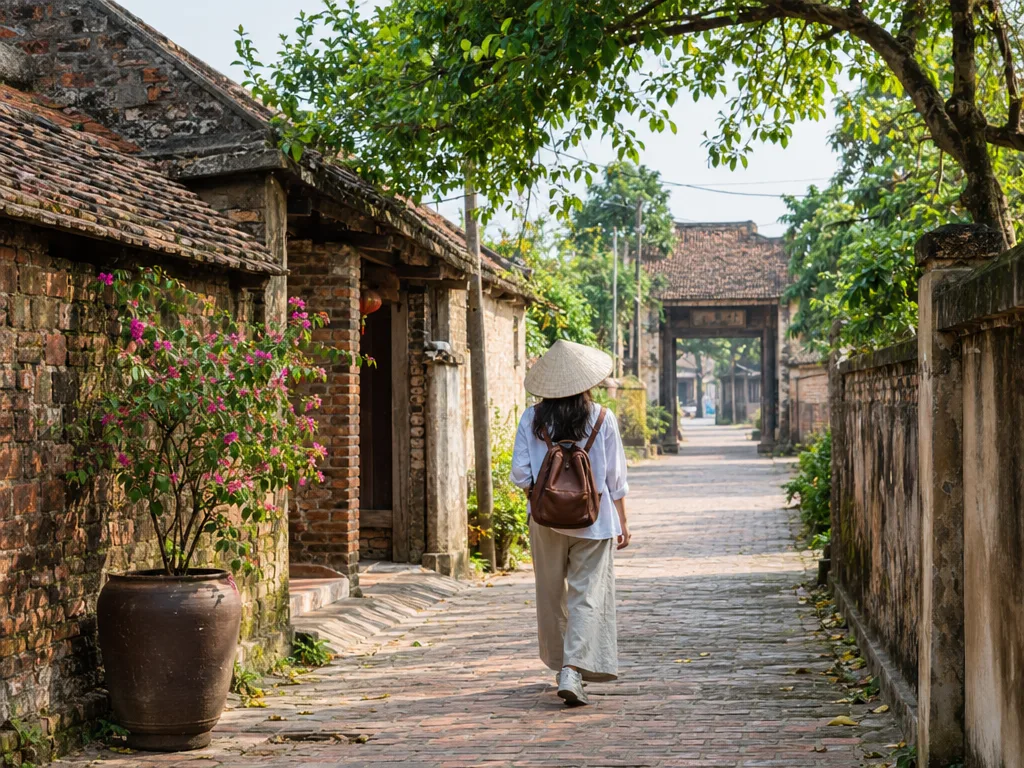
Start with the lanes rather than trying to tick off every named stop. Look for the proportions of the houses, the way gates open onto courtyards, the texture of laterite walls, and the small details that show a home is still occupied. A house may contain heritage features while also functioning as a kitchen, workshop, or family gathering place. That combination is the point: Duong Lam is valuable because old forms remain connected to contemporary life.
Do not assume that every attractive doorway is a public attraction. Pause at the entrance, look for signs, and ask before stepping into a courtyard or taking close-up photographs of residents. If a host welcomes visitors, listen to the explanation instead of treating the house as a quick photo stop. A small contribution or purchase may support the household, but it should never be presented as an entitlement to enter.
Mong Phu and communal spaces
Mong Phu is often the focus of a first visit because it gives travelers a clear sense of the village’s historic core. The communal house and surrounding lanes help explain how a settlement was organized around shared worship, meetings, and social ties. Give yourself time to notice the transition between formal communal architecture and ordinary domestic spaces. That contrast is more informative than rushing between isolated landmarks.
Temples, gates, and the countryside edge
Build in a short walk beyond the busiest cluster. Depending on the route and local access, you may pass temples, old gates, ponds, vegetable plots, rice fields, or quieter residential lanes. The village is best understood as a connected environment, so the walk between sights matters. In hot weather, leave exposed stretches for earlier or later in the day and carry water rather than expecting every lane to have a shop.
A realistic Duong Lam day trip itinerary from Hanoi
Morning: arrive before the heat builds
Leave Hanoi with enough margin for traffic and an arrival that does not force you straight into a rushed walking loop. On reaching the area, orient yourself first: confirm where your driver or guide will wait, note a meeting point, and decide whether you want a shorter or longer circuit. If you are traveling independently, save route information before leaving Hanoi because battery, navigation confidence, and mobile coverage can vary once you are walking through smaller lanes.
Spend the first part of the visit in the historic core. Move slowly through the lanes, visit publicly accessible heritage spaces, and keep the morning focused on observation rather than shopping. Early hours generally make it easier to hear explanations and photograph architecture without creating congestion, but avoid assuming that every place follows a fixed tourist timetable. Check current arrangements locally on the day.
Midday: eat simply and pause
A village visit is more comfortable when lunch is treated as a break, not another timed attraction. If your host or guide recommends a family-run meal, ask what is included and whether you need to order in advance. Travelers with allergies or dietary restrictions should communicate them clearly and confirm ingredients rather than relying on a vague promise that a dish is “simple.” Bring a small backup snack if your needs are strict.
Afternoon: choose depth over distance
After lunch, pick one purpose for the second half: a quieter walk, a conversation with a local host, more time for architecture, or a gentle countryside loop. Trying to cover every corner can make the final hours feel like transport between stops. If the heat, rain, or uneven ground is tiring, shorten the route. A thoughtful three-hour visit is better than an exhausted full circuit that leaves you unable to pay attention.
How to get to Duong Lam from Hanoi
The practical choice depends on your group size, confidence navigating Vietnam, and whether you want flexibility. A private car or taxi is the simplest option for travelers who want a direct journey and control over the return time. It is useful for families, photographers carrying equipment, and anyone combining Duong Lam with another stop near Son Tay. Agree on the waiting arrangement and total plan before setting off; do not rely on finding the same driver later by chance.
Public transport can reduce cost, but it requires more planning and usually more walking or transfers. Check the current route, departure point, and last-return options shortly before travel rather than trusting an old blog post. Route numbers, stopping patterns, and road conditions can change. If you use a bus for part of the journey, keep your destination written in Vietnamese as well as English and allow a buffer for the final connection.
A guided trip can be worthwhile when interpretation is your priority. The physical route is not especially complicated, but a good guide can explain why a house, gate, temple, or communal space matters and can help you ask permission appropriately. Compare inclusions carefully: transport, meals, entrance arrangements, and walking time may differ. The general advice in How to Compare Day Trips from Hanoi is useful because the cheapest headline price may not describe the same experience.
What to pack and what to wear
Pack for walking on a rural surface rather than for a formal city attraction. Comfortable shoes with grip are more useful than fashion footwear, and light clothing with sun protection helps in warmer months. A hat, water, tissues, hand sanitizer, insect repellent, and a small power bank are sensible additions. If rain is possible, a compact waterproof layer protects you and your phone.
Dress modestly enough for temples and family homes. You do not need special ceremonial clothing, but shoulders and knees covered by lightweight fabric make it easier to enter religious spaces respectfully. Carry cash in small denominations for drinks, snacks, or modest purchases, while avoiding the assumption that every household accepts cards or has a formal shop.
Photography deserves its own preparation. Keep your camera or phone ready for details, but ask before photographing people, altars, family interiors, and private courtyards. A telephoto lens does not remove the need for permission. If you photograph a craft demonstration or a host explaining a house, consider whether a purchase or tip is appropriate and follow the host’s lead.
How to visit a living heritage village respectfully
The phrase “living heritage” should change how you behave. Residents are not performers who owe visitors access, and a quiet lane may be someone’s front path rather than a public walkway. Keep voices low near homes, do not block entrances, and step aside when motorbikes or local residents need to pass. Avoid touching walls, gates, furniture, or religious objects unless invited.
When a home is open to visitors, ask what the visit involves. Some hosts may offer tea, a short explanation, food, or a chance to buy local products. Listen to the terms rather than bargaining aggressively over a small household sale. If you are unsure whether a space is open, wait for a guide or ask politely. A respectful pause prevents the common mistake of entering simply because a door looks welcoming.
Keep the village clean and quiet. Use bins where available, carry wrappers until you find one, and avoid single-use plastic when practical. Do not fly a drone without clear permission and current local authorization. The aim is to make sure your visit does not create extra work or discomfort for the people who live there.
For a broader approach to responsible behavior, read Visiting Duong Lam with Care for a Living Heritage Village. It complements this itinerary by focusing on the relationship between visitor curiosity and community life.
Choosing between an independent visit and a guided tour
Go independently if you enjoy planning, can handle changing transport details, and are happy to discover the village without a continuous historical explanation. This style gives you more control over pauses and photography. It is also easier to leave early if the weather turns uncomfortable.
Choose a guide if this is your first rural excursion in northern Vietnam, if you want help with local conversations, or if your group includes travelers who would benefit from a slower, clearly explained route. Ask whether the guide has enough time for walking and questions. A tour that only provides a vehicle and a few photo stops may not deliver the cultural depth you expect.
Private transport is not automatically more meaningful, and public transport is not automatically more authentic. The right choice is the one that gives you enough time, energy, and confidence to behave thoughtfully. If you are comparing this outing with other destinations, the site’s day trip planning and comparisons resources can help you weigh travel time, walking intensity, and the kind of experience you want.
Common planning mistakes to avoid
- Building an overfull route: Combining too many distant attractions can turn a village visit into hurried transfers.
- Trusting old practical details: Transport routes, access arrangements, and visitor services can change, so confirm them close to travel.
- Expecting a theme park: The charm comes from ordinary life and historic fabric, not constant entertainment.
- Ignoring the weather: Heat, rain, and humidity affect walking comfort. Start earlier, carry water, and keep the route adaptable.
- Photographing first and asking later: Permission is part of the experience, especially inside homes and religious spaces.
- Leaving no time for the return: Agree on a pickup point and departure buffer before you become absorbed in the last lane.
Is Duong Lam right for your day?
Choose Duong Lam if you want a culturally focused day trip from Hanoi with a gentle rhythm, historic architecture, and a strong sense of place. It is especially rewarding for travelers who enjoy walking, noticing details, and learning how heritage survives inside a working community. It may feel less satisfying if you want dramatic viewpoints, a packed attraction list, or guaranteed entertainment at every stop.
Plan the outing around respect and flexibility: travel with a realistic route, check current logistics, dress for walking and religious spaces, and allow residents to set the boundaries of your visit. With that mindset, Duong Lam Ancient Village becomes more than an excursion outside the capital. It becomes a chance to understand the countryside at human scale, one lane, courtyard, and conversation at a time.
For a wider itinerary, browse the Duong Lam Ancient Village category for related planning ideas.
JOIN THE CONVERSATION
Comments (0)
No comments yet. Be the first to share a thought.