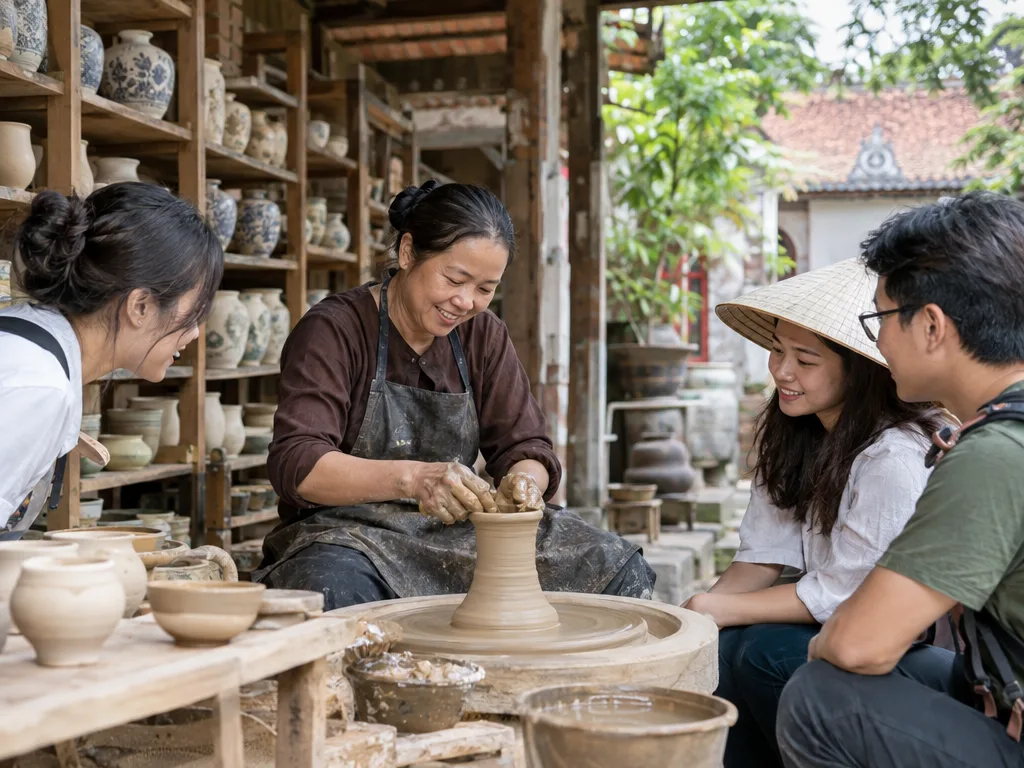
Bat Trang pottery village is an easy idea to understand but a surprisingly varied place to visit. One workshop may focus on hands-on making, another on finished ceramics, while a third offers a quieter look at how a family business keeps a traditional craft alive. If your main question is how to choose a Bat Trang pottery workshop, start with the experience you want rather than the biggest showroom or the fastest stop.
This guide is for travelers planning a focused village visit from Hanoi. It explains what to look for in a workshop, how to fit making pottery into a wider walk, how to shop thoughtfully, and how to avoid turning a living craft community into a rushed checklist. It complements a general village overview by concentrating on decisions that shape the quality of the visit.
Decide what kind of Bat Trang experience you want
Before comparing workshops, describe your ideal visit in one sentence. Do you want to make a small object, learn about the craft, browse household ceramics, photograph village streets, or buy a meaningful gift? These aims overlap, but they do not require the same amount of time or attention.
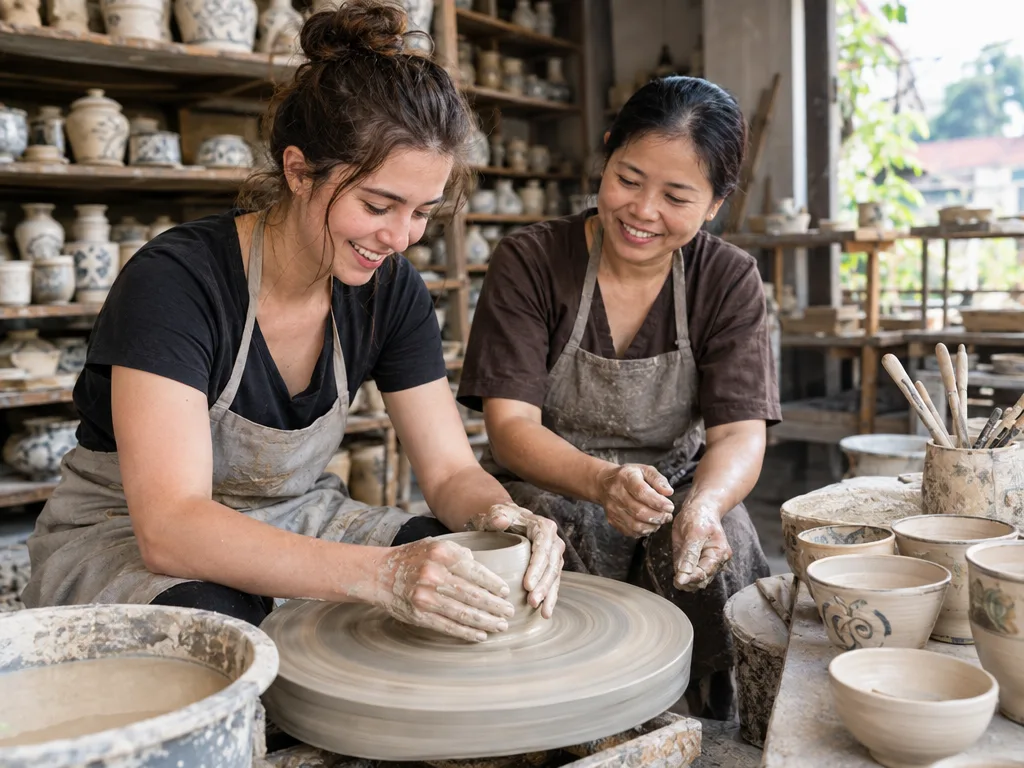
- Hands-on making: Choose a place that clearly explains whether visitors shape, decorate, glaze, or simply paint a prepared item.
- Craft learning: Look for a workshop where someone can explain the stages of production and answer questions about clay, forms, decoration, and firing.
- Shopping: Prioritize a well-organized showroom with clear product information and secure packing rather than trying to visit every shop.
- Slow village exploration: Choose one practical activity, then leave room for lanes, courtyards, community spaces, and unplanned discoveries.
Bat Trang is not only a visitor attraction. It is a working pottery community with businesses, homes, movement of goods, and residents going about ordinary life. The local government describes the village’s continuing craft as part of its cultural and economic identity, while also noting the pressures of competition, changing designs, transport, and passing skills to younger generations. That context is useful: a good visit should make room for craft, commerce, and community without confusing them.
What to check before booking or walking in
Workshop quality is easier to judge from the details of the offer than from broad promises such as “traditional experience.” Ask what is included and what part of the process you will actually do. A clear answer usually indicates that the host has designed the activity for visitors rather than adding it as an afterthought.
Questions worth asking
- Is the activity suitable for first-time visitors?
- Will the session be guided, or will you work independently?
- Which steps are hands-on and which are demonstrated?
- Can children or travelers with limited mobility take part comfortably?
- How long should you allow, including drying, finishing, or collection arrangements?
- How will a finished piece be packed or sent if you cannot carry it?
- Are designs selected from a set menu, or can you create your own decoration?
Do not assume that the most elaborate workshop is the best match. A short painting activity may suit a traveler with a tight schedule, while someone interested in technique may prefer a smaller session with more explanation. If the offer is vague about time, process, or collection, treat that as a reason to clarify before committing.
Understand the pottery process without expecting a factory tour
Pottery is a sequence, not a single moment at a wheel. Clay must be prepared, formed, dried, decorated or glazed, and fired. A visitor activity may show only one or two of those stages. That is normal, and it can still be worthwhile if the workshop explains what happens before and after your participation.
When you visit, notice how the host talks about the material. Useful explanations may cover why an object needs to dry before firing, how surface decoration changes under glaze, or why two apparently similar pieces differ in weight and finish. You do not need a technical lecture, but a few practical details will help you understand the labor behind a bowl, cup, tile, or figurine.
Hands-on sessions often involve making a small form or decorating a prepared one. If your piece is not taken home immediately, ask what happens next. It may need drying, firing, finishing, or collection at a later time. Avoid treating an unfinished object as a failed souvenir; the delay is part of the process. If you need a guaranteed take-home item on the same day, confirm that before starting.
Build a practical route through Bat Trang
A satisfying Bat Trang day does not require a long list of stops. A simple route is easier to remember and leaves enough energy for looking closely. Begin with one anchor activity, such as a workshop or craft explanation. Then walk through the nearby village area, pause for a meal or drink, and reserve time for shopping only after you know what you actually want.
A flexible sequence
- Start with orientation. Identify the workshop, meeting point, and any agreed collection or packing arrangements.
- Do the hands-on activity early. Your attention is usually better before a long walk, and you will understand later displays more clearly.
- Explore at walking pace. Look for working spaces, finished goods, signs of production, and the relationship between homes and businesses.
- Take a real break. A village visit is more enjoyable when lunch, water, and shade are part of the plan rather than emergency decisions.
- Shop selectively. Compare form, finish, usefulness, and packing before buying.
- Leave a buffer. Traffic, browsing, loading goods, and an unexpectedly interesting workshop can all change the pace.
Keep the route adaptable. A pottery village is not a museum with every room arranged for visitors, and a quiet lane may be more memorable than another commercial stop. Follow local signs and instructions, and do not enter production areas unless invited.
How to shop for ceramics responsibly
Shopping is part of the appeal, but buying well requires more than choosing the brightest glaze. First decide whether the item is for daily use, decoration, or a gift. A useful object should fit your luggage, home, and tolerance for care. A fragile piece that creates stress for the rest of the trip may not be the best souvenir.
Compare similar products rather than assuming that a higher price automatically means better quality. Look at the balance, finish, glaze consistency, edges, and any visible variation that matters to you. Handmade work can contain small differences; ask the seller which marks are expected character and which indicate damage. If a piece is intended for food or drink, ask the seller how it should be used and cared for instead of relying on appearance alone.
Packaging deserves attention. Confirm whether the shop can wrap the item for transport and whether you should carry it yourself or arrange delivery. Keep receipts or shop details for anything expensive or custom-made. Avoid bargaining in a way that dismisses the maker’s work. The local authority’s recent discussion of Bat Trang emphasizes the value of protecting the village’s reputation while adapting products and businesses to modern markets; respectful purchasing supports that balance better than treating every item as a disposable bargain.
Planning for families, groups, and different interests
Bat Trang can work well for mixed groups when the day includes more than one way to participate. A child may enjoy shaping or decorating, while an adult cares more about design, history, or buying tableware. Agree in advance that nobody has to spend every minute inside a shop.
- With children: Choose a clear, manageable activity and allow time for washing hands, waiting, and looking at finished examples.
- With older travelers: Ask about seating, walking distances within the workshop, surfaces, and the availability of breaks.
- With photographers: Treat homes, workers, and production spaces as places where permission matters.
- With serious shoppers: Set a meeting point and a carrying plan so browsing does not split the group for the entire visit.
- With first-time visitors to Vietnam: Keep the schedule light enough to absorb unfamiliar transport, food, and village rhythms.
Groups should also agree on whether the priority is an activity or a general outing. Trying to combine a detailed workshop, extensive shopping, a long village walk, and several unrelated attractions can make each part feel rushed. One strong pottery experience is usually more valuable than several shallow ones.
Respect the village as a living craft community
Responsible behavior is practical, not ceremonial. Ask before photographing people, workspaces, or private courtyards. Stay out of restricted areas, keep voices low near homes, and follow workshop instructions around tools, clay, glazes, kilns, and packed goods. Do not handle products without permission, especially pieces that may be drying or waiting for finishing.
Remember that the village’s visual character is connected to work. The local government’s cultural coverage describes ongoing efforts to preserve traditional pottery while improving quality, business reach, digital promotion, and opportunities for younger generations. Visitors benefit from that living continuity, so the most respectful response is to be curious without demanding a performance at every stop.
Waste and transport also matter. Carry water responsibly, avoid leaving packaging behind, and plan how fragile purchases will move through the rest of your trip. If a workshop offers a collection or delivery option, confirm the arrangement clearly and keep the contact information.
When a workshop is the right choice—and when it is not
A workshop is a strong choice if you want to understand the craft through your hands, have enough time to follow instructions, and are comfortable with the possibility that a finished piece may require later handling. It is especially useful for travelers who want a more memorable activity than simply buying a souvenir.
You may prefer a self-guided visit if your schedule is uncertain, your group has very different interests, or you mainly want to browse ceramics and observe village life. You can still learn by asking thoughtful questions and choosing one or two stores carefully. The right plan is the one that matches your pace rather than the one with the most inclusions.
A simple checklist for your Bat Trang visit
- Choose your main purpose: making, learning, walking, or shopping.
- Confirm what the workshop activity includes and how long it takes.
- Ask how unfinished or fragile pieces are completed, packed, or collected.
- Leave space for a meal, water, and an unhurried village walk.
- Bring a practical way to protect small purchases during the rest of your trip.
- Ask before photographing people or entering working areas.
- Buy what you can carry and use, not what a rushed itinerary pressures you to choose.
The best Bat Trang pottery experience is not measured by the number of shops visited. It comes from understanding what you are choosing, meeting the craft at a human pace, and leaving with a clearer sense of how a traditional village continues to work. Pick one workshop that fits your interests, build a flexible route around it, and let the pottery—not the checklist—set the rhythm of the day.
JOIN THE CONVERSATION
Comments (0)
No comments yet. Be the first to share a thought.