A Ba Vi National Park day trip is one of the easiest ways to exchange Hanoi’s busy streets for cool forest air, mountain roads, and a slower rural landscape. The park is close enough for a full day away, yet varied enough to reward more than a quick photo stop. You can combine a scenic drive, a short forest walk, mountain temples, old French-era remains, and time for an unhurried meal without trying to see every corner.
This guide focuses on how to plan the day well: what the park offers, how to build a realistic route, when to go, and how to choose transport. For wider planning ideas, compare this guide with A Nature-Focused Day in Ba Vi and the wider Ba Vi nature trips category.
Why choose Ba Vi for a day trip from Hanoi?
Ba Vi works particularly well when you want nature without committing to a long intercity journey. Vietnam’s official tourism site describes the national park as roughly an hour and a half from the capital, with rural hamlets on the approach and forested hills, streams, and wildlife sounds inside the park. Actual travel time depends on your starting point, traffic, weather, and whether you stop along the way, so treat that estimate as a planning guide rather than a guarantee.
The main appeal is variety. A day here can feel active, cultural, and restorative at the same time. The mountain has three principal peaks: Vua, Tan Vien, and Ngoc Hoa. The official park site identifies Vua as the highest at 1,296 metres, followed by Tan Vien at 1,227 metres and Ngoc Hoa at 1,131 metres. You do not need to climb all three to enjoy Ba Vi. Most visitors will have a better experience choosing a small number of stops and leaving room for the road, weather, and unplanned views.
Ba Vi is also a useful choice for travellers who have already visited Hanoi’s urban sights and want a countryside contrast. If you prefer an even broader comparison of nearby escapes, A Countryside Escape from Hanoi at an Unhurried Pace explains how to choose a slower day outside the city.
What can you see in Ba Vi National Park?
Forest roads and mountain scenery
The journey upward is part of the experience. As the road leaves the lower countryside, the scenery changes from homes, fields, and roadside businesses to thicker vegetation and cooler-looking slopes. Rather than treating the drive as dead time, plan for occasional safe stops where permitted and enjoy the gradual change in altitude.
The official park describes a rich range of plants and animals, including hundreds of medicinal plant species and many recorded bird, mammal, reptile, amphibian, and insect species. That does not mean wildlife sightings are guaranteed. The better approach is to listen, observe quietly, and avoid treating the forest as a guaranteed photo backdrop.
Temples and historic traces
Ba Vi’s landscape is closely connected with local spiritual and national history. Vietnam Tourism highlights the temple for Ho Chi Minh on one of the peaks, while the wider mountain area includes temples associated with Tan Vien and other local traditions. There are also remnants of French-era buildings and outposts, now softened by vegetation and weather.
These places are not separate from the natural experience. They help explain why Ba Vi feels different from a simple picnic park: the forest, mountain beliefs, historical memory, and rural life overlap. Dress respectfully when visiting shrines, keep voices low, and follow any access instructions posted on site.
Seasonal flowers and changing conditions
Ba Vi’s appearance changes with the season. The official park website publishes seasonal notices, including guidance for wild-sunflower viewing and updates about visitor access. Flower displays are weather-dependent and can attract larger crowds, so do not build the entire day around a single bloom forecast unless you have checked the latest official notice.
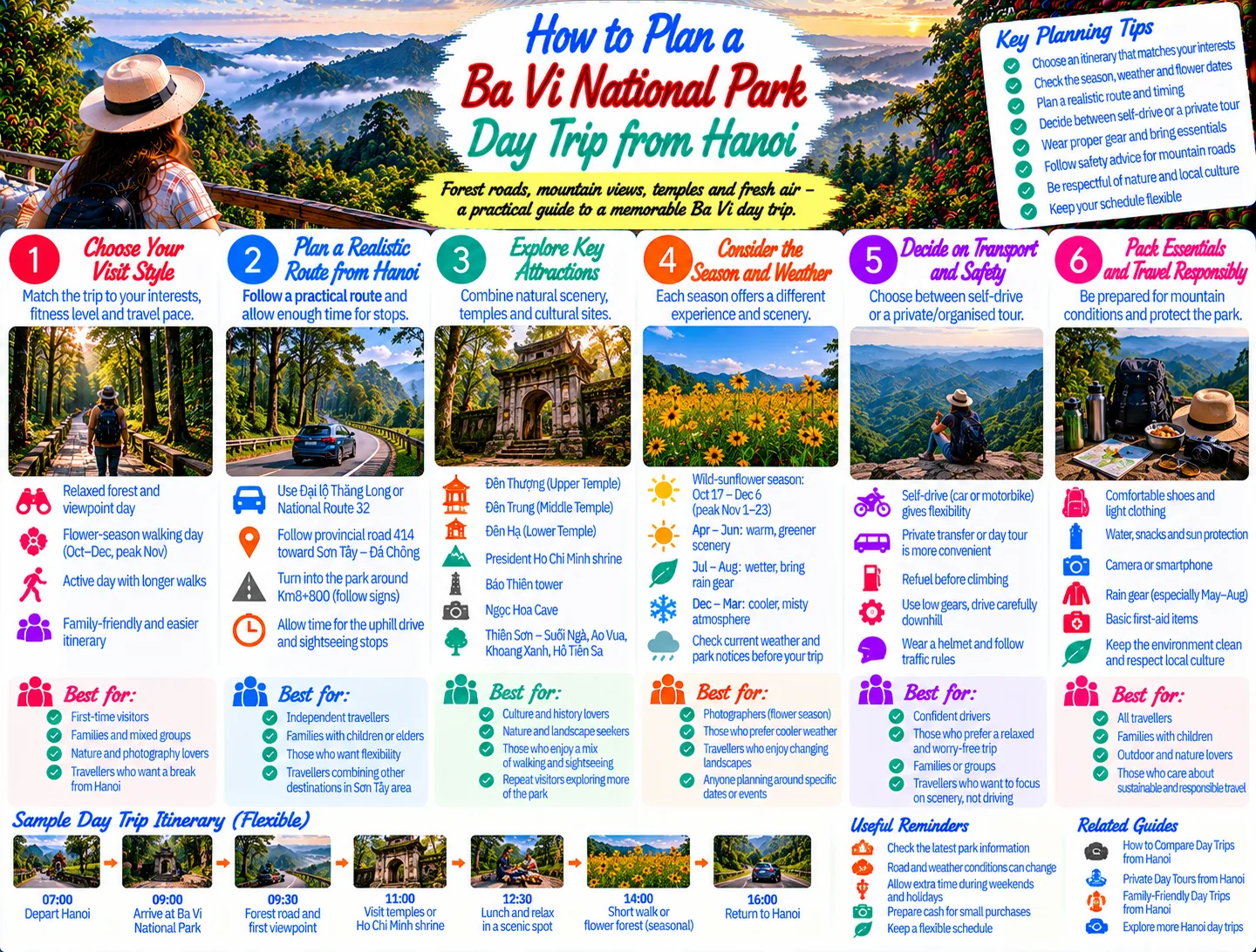
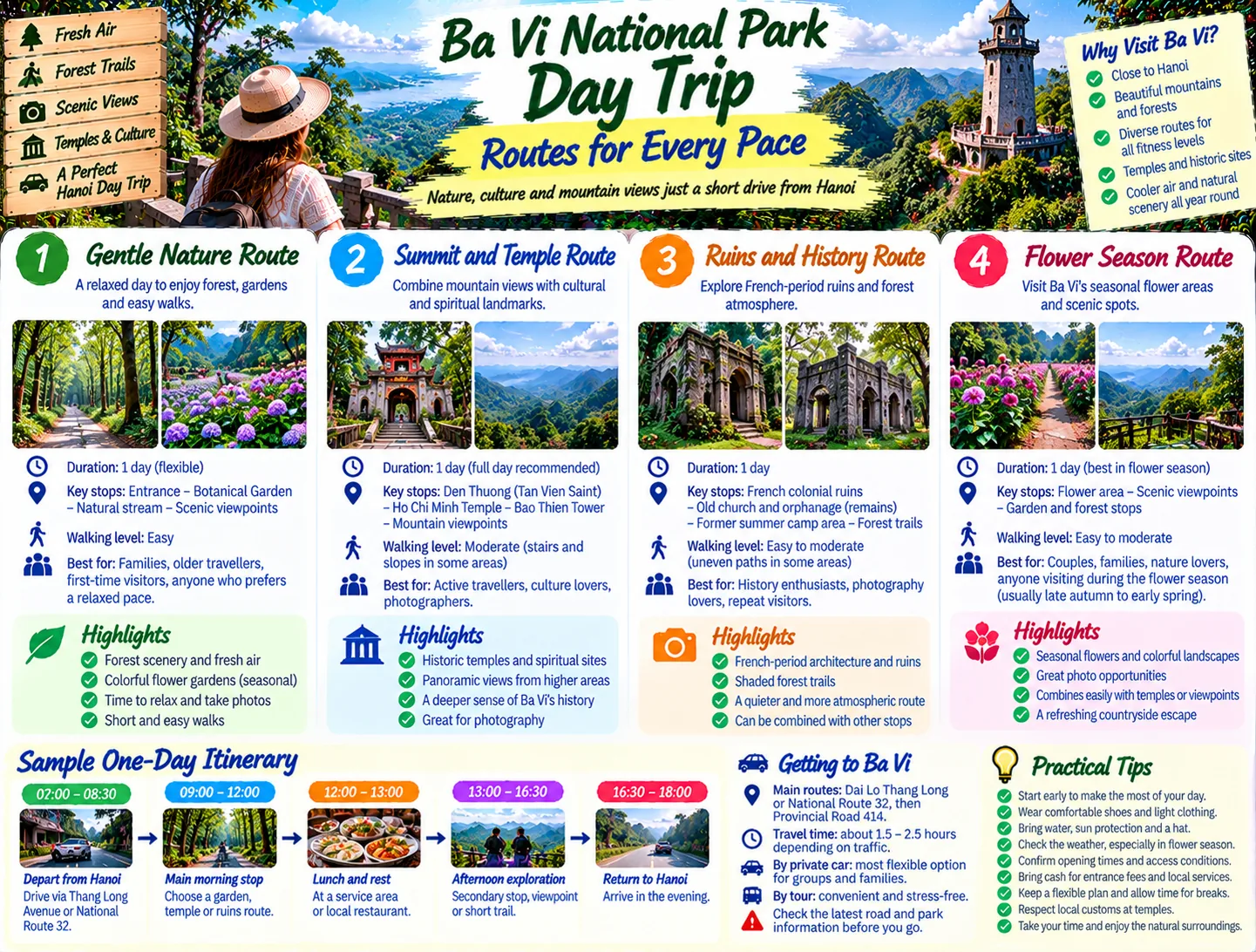
A realistic Ba Vi National Park day trip itinerary
The following route is deliberately flexible. It is designed for travellers who want a complete day rather than a checklist. Adjust it according to your departure time, fitness, transport, and the day’s weather.
- Early morning: Leave Hanoi after breakfast, allowing extra time for traffic and a short countryside stop if useful.
- Late morning: Enter the park, confirm the current visitor information, and continue toward the higher scenic areas by the permitted route.
- Midday: Choose one main viewpoint, temple area, or heritage stop rather than rushing between every attraction.
- Early afternoon: Take a short forest walk or spend time at a quiet viewpoint. Keep the walk within your group’s ability and daylight margin.
- Later afternoon: Descend with time for a meal or countryside stop near the foothills, then return to Hanoi.
If your group includes young children, older travellers, or anyone uncomfortable with steep steps, make the itinerary more scenic than strenuous. Travellers who want a longer hike should reserve more time for the mountain and avoid adding several distant attractions outside the park.
How to get from Hanoi to Ba Vi
Private car or private day tour
A private car is the simplest option for a first visit because it lets you start early, carry layers and water, and change the order of stops when the weather changes. A private day tour can be useful if you want a driver who already understands the route or prefer not to manage mountain roads yourself. Ask in advance whether the itinerary includes the national park entrance, waiting time, meals, and any optional stops.
For travellers comparing flexible transport with a fixed group schedule, the article When a Private Day Tour Makes Sense offers a useful framework. The key question is not simply price; it is whether control over departure time and stops improves your day.
Motorbike
Experienced riders may choose a motorbike for the freedom and scenery, but this is not a route to treat casually. Mountain roads can be wet, misty, uneven, or busy during popular periods. Only ride if you are confident with the bike, local traffic, braking on descents, and changing weather. Wear proper protective gear and avoid returning after dark if conditions are poor.
Organised group transport
A group trip can reduce planning effort and make the cost of transport more predictable. The trade-off is less flexibility: you may have fixed departure times, limited time at each stop, and less control over meal arrangements. Check the itinerary carefully, especially if the advertised trip combines Ba Vi with several other attractions. A packed schedule can turn a nature day into a long sequence of transfers.
When is the best time for a Ba Vi day trip?
There is no single perfect month for every traveller. Choose based on the experience you want. Clearer, drier conditions can make walking and viewpoints more comfortable, while wetter periods may bring greener vegetation but also slippery paths and reduced visibility. Cooler days are usually more pleasant for uphill walking than hot, humid afternoons.
Weekdays generally offer a calmer atmosphere than weekends, school holidays, and popular flower-viewing periods. If you can travel midweek, do so. Start early whenever possible, especially if you want quiet roads, soft morning light, or a better chance of seeing cloud around the upper slopes. Weather can change quickly in the mountains, so keep a lower-effort alternative in mind.
Check the official park website shortly before departure. Its current notice board includes visitor information, seasonal guidance, and changes affecting access or ticket operations. Do not rely on an old blog post for opening times, ticket prices, fire restrictions, or special-event arrangements.
What to pack for Ba Vi National Park
Pack for a day that may shift between warm lowland weather and cooler, damp conditions higher up. A practical day bag should include:
- Comfortable shoes with grip, especially if you plan to walk beyond paved areas.
- Light layers and a rain jacket that can be reached quickly.
- Drinking water and simple snacks, while keeping all packaging until you find a proper bin.
- Sun protection, insect repellent, and any personal medication.
- A small towel or spare shirt if you expect humidity, rain, or a longer walk.
- Cash as a backup, because connectivity and card acceptance can vary outside the city.
- A phone power bank and an offline copy of your route or meeting point.
Do not overpack camping equipment or specialist hiking gear unless your booking and the park’s current rules specifically support an overnight or organised activity. For a normal day trip, light and practical is better.
How to travel responsibly in the park
Ba Vi is a protected forest, not simply a recreational backdrop. Stay on marked or clearly permitted paths, follow staff instructions, and never climb on fragile ruins or enter closed areas for a photograph. Do not collect plants, disturb animals, feed wildlife, or play loud music near temples and forest areas.
Fire safety matters, especially during dry conditions. Use only facilities and areas explicitly designated for cooking or picnicking, and follow any temporary restrictions. Carry reusable water bottles where possible and take your rubbish back out if a suitable disposal point is not available.
Respect local communities on the approach to the park. Slow down near homes, avoid blocking narrow roads, ask before photographing people, and buy food or local products in a way that supports small businesses without treating residents as scenery.
Is Ba Vi suitable for families?
Ba Vi can suit families, but the best version is a shorter, flexible outing rather than an ambitious summit challenge. Select stops with accessible paths, build in rest breaks, and keep children close on roads, steps, and forest edges. Weather changes are more tiring for young children than adults, so carry an extra layer and do not assume that a warm Hanoi morning will feel the same at altitude.
Families comparing several easy day trips can also browse the Family-Friendly Day Trips category. For Ba Vi specifically, agree on one or two priorities before leaving: a scenic drive, a temple visit, a short walk, or a picnic-style stop. That makes it easier to end the day while everyone is still enjoying it.
Common planning mistakes to avoid
Trying to see everything
Ba Vi looks manageable on a map, but mountain roads, queues, weather, and walking time add up. Choose a route with breathing room instead of collecting distant stops.
Using outdated practical information
Access arrangements, ticket counters, opening times, and seasonal restrictions can change. Check the official park channels immediately before travel and confirm anything important with your driver or organiser.
Underestimating the descent
Do not schedule your final stop so late that you must descend in darkness or heavy rain. Keep a buffer before your return to Hanoi, especially if you are riding a motorbike.
Confusing a nature day with a resort day
Ba Vi has accommodation and leisure services nearby, but a national-park visit still involves uneven ground, changing conditions, and limited control over the environment. Set expectations accordingly, particularly for travellers who want comfort at every stop.
Final advice for planning your Ba Vi day trip
The strongest Ba Vi National Park day trip is not the one with the most attractions. It is the one that matches your group’s pace, starts early enough to avoid unnecessary pressure, and leaves time to notice the forest and mountain landscape. Choose reliable transport, check current official notices, pack for rain and cooler air, and keep your route flexible.
Ba Vi is close enough to Hanoi for a practical escape but distinctive enough to feel like a real change of scene. With a modest plan and respectful behaviour, you can combine nature, history, and rural scenery in one rewarding day.
JOIN THE CONVERSATION
Comments (0)
No comments yet. Be the first to share a thought.