A Ba Vi National Park day trip is a good choice when you want forest air, mountain roads, viewpoints, and a little history without turning the day into a race. The key is not to collect every stop. Choose one main walking experience, leave room for the mountain road, and treat the park as a protected landscape rather than a theme park. This guide explains how to plan a Ba Vi day trip from Hanoi around a sensible hiking route, heritage sites, seasonal conditions, and simple choices that make the outing more comfortable.
What makes a Ba Vi day trip worth planning?
Ba Vi works well for travelers who want a nature-led escape with more texture than a simple picnic. The national park’s official overview describes a protected mountain landscape with forest zones, streams, biodiversity, and cultural sites including temples and the shrine dedicated to President Ho Chi Minh. A day here can move between quiet walking, broad views, and respectful visits to places of worship without needing a packed sightseeing checklist.
The landscape gives the trip a different rhythm from Hanoi. You spend part of the day on a rising road, then slow down for short walks, shaded viewpoints, or a longer forest trail. The experience depends as much on weather, road conditions, crowd levels, and your group’s energy as on the number of places you reach. For a wider comparison of countryside options, see Hanoi Countryside Tours, then decide whether a mountain environment suits your day better than a village or flat rural route.
Build the day around one main nature experience
The common planning mistake is trying to combine a long hike, every temple, a picnic, and several photo stops before returning to Hanoi. A better Ba Vi National Park itinerary has one anchor: a forest walk, a high-elevation heritage circuit, or a scenic drive with several short walks. Everything else becomes optional.
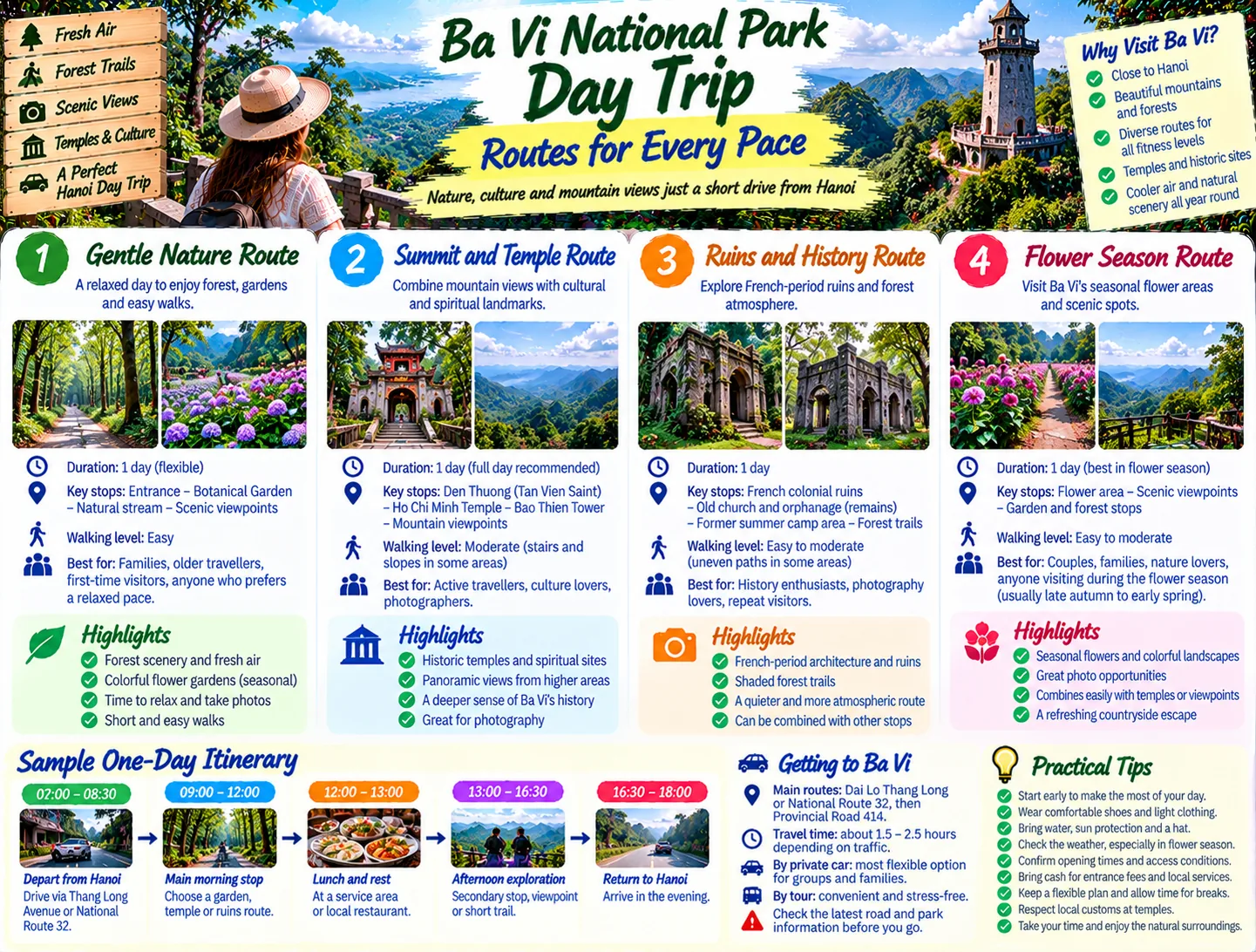
Option one: a walking-first day
Choose this if your priority is birdsong, trees, uneven paths, and time away from traffic. Start early enough to reach the park with energy left for walking. Keep the route conservative unless you already know the terrain. A short, enjoyable trail is more useful than an ambitious route that leaves the group tired before the return journey. Wear shoes with reliable grip, carry water, and do not treat a roadside viewpoint as proof that the whole mountain is easy to walk.
Option two: a nature-and-heritage circuit
This suits visitors who want scenery but do not want a full hiking day. Use the drive through the park as the spine of the itinerary, then add a few short walks and one or two cultural stops. The park’s overview identifies several temples and historical or cultural landmarks, but opening conditions and access can change. Check the latest notices before departure and allow time to visit quietly rather than rushing through a sequence of photo points.
Option three: a slower shared day
For mixed-ability groups, keep the main plan simple: scenic stops, a short forest walk, lunch, and a flexible return. A private vehicle can make pauses easier, but the advantage is control over pace, not permission to drive aggressively. If your group needs a tailored schedule, the article When a Private Day Tour Makes Sense offers a useful way to think about flexibility, vehicle time, and a slower itinerary.
How to plan the route from Hanoi
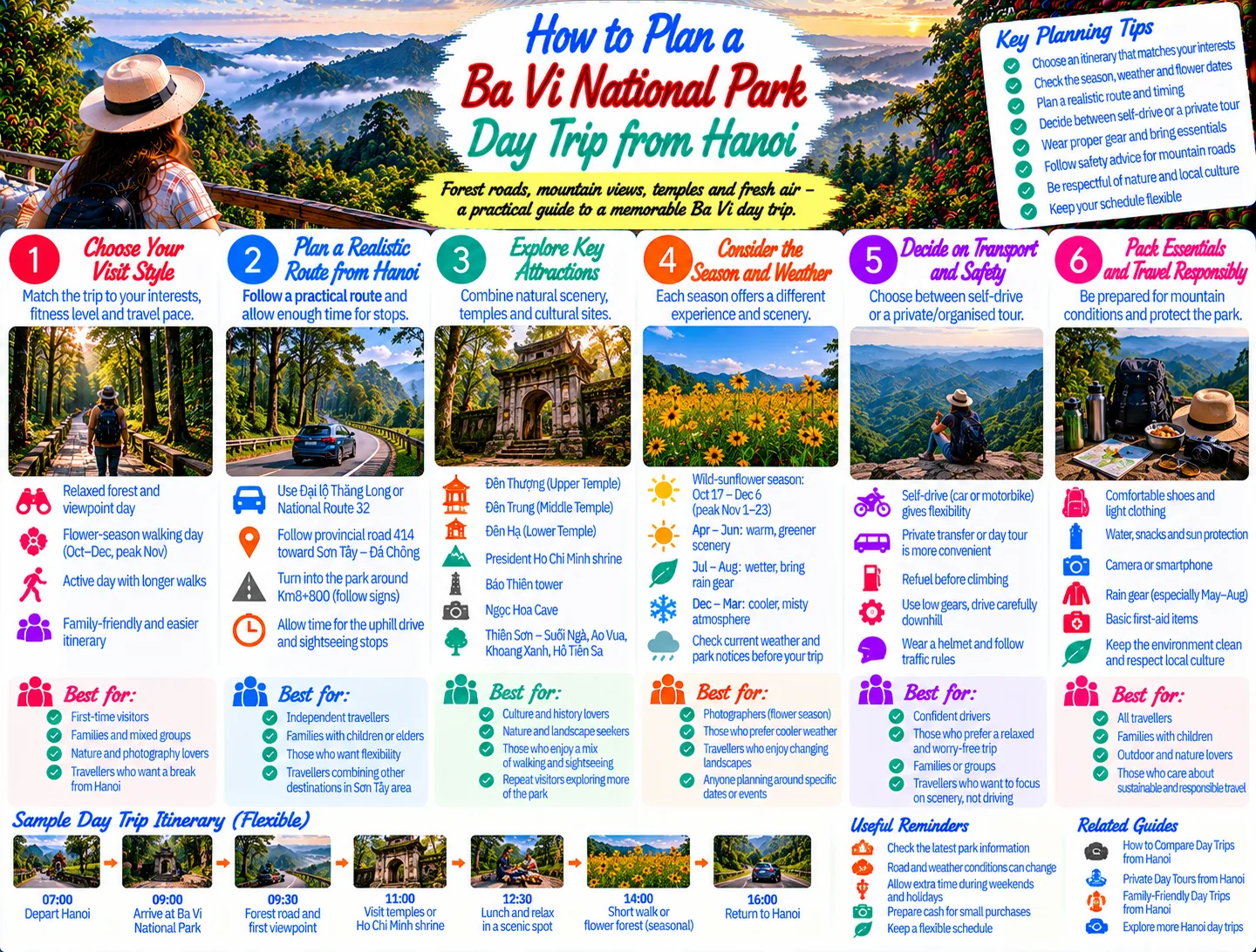
From Hanoi, plan the day as a mountain excursion rather than a quick city transfer. The park’s current visitor guidance gives two broad approaches from the capital: travel via Đại lộ Thăng Long or National Highway 32, then connect with Provincial Road 414 toward the park entrance. It also notes a signposted turn near Km8+800 on that road. These details help with orientation, but navigation apps, local traffic, roadworks, and your exact starting point can change the practical timing.
Before leaving, save the park entrance and your intended first stop, not just “Ba Vi National Park.” Download or screenshot the route in case mobile coverage becomes inconsistent on the mountain. Ask the driver to leave margin for the final approach, parking, and a short orientation pause. The road is part of the experience, with bends and changing elevation; it is not a section to hurry through so that you can recover time later.
- Leave Hanoi with a clear latest return time, especially if you have an evening booking.
- Confirm the vehicle is suitable for a winding mountain approach and that the driver is comfortable descending slowly.
- Keep the first stop flexible until you have checked weather, visibility, and crowd conditions.
- Use the official park channels for current access, ticket, and visitor notices instead of an old social-media post.
For a general framework for balancing travel time, attraction time, and return logistics, compare this plan with How to Compare Day Trips from Hanoi. Ba Vi is a better fit when the journey itself can be part of the day and you are comfortable with a less tightly timed schedule.
Choose the right season and check current conditions
Ba Vi changes character through the year. Wet weather can make paths slippery and reduce views, while bright conditions can make exposed stops feel warmer than the forest. Cloud, mist, and rain are not automatically reasons to cancel, but they should change the plan. On a damp day, shorten the walking section, avoid rushing on descents, and choose stops where the surface is manageable.
The national park’s official 2026 visitor guide identifies a late-October to early-December window for its wild sunflower season, with peak viewing dates inside that period. Seasonal displays are conditions-dependent, so treat the dates as a planning indication for that year rather than a permanent calendar rule. If flowers are your main reason for visiting, check the latest park announcement before setting out and expect heavier demand on weekends or around popular viewing periods.
Visibility also matters. A clear day may reward a longer viewpoint stop, while mist can make the forest feel atmospheric but reduce distant panoramas. Pack for both possibilities: a light rain layer, sun protection, and a dry bag or waterproof pouch for phones and documents. The goal is to keep a modest plan enjoyable when conditions are less photogenic than expected.
What to pack for a comfortable Ba Vi hike
Good packing for Ba Vi is practical rather than technical. You do not need a large expedition kit for a normal visitor day, but you do need to respect uneven ground, changing temperatures, and waiting between stops.
- Footwear: Choose closed shoes with a grippy sole. The park’s visitor guidance recommends low-heeled sports shoes to reduce slipping.
- Water and snacks: Carry enough for the walking you expect, and do not assume every stop will have the exact food or drink you want.
- Layers: A light outer layer helps with cool, damp, or windy conditions at higher points.
- Rain and sun protection: Bring a compact rain layer, hat, sunscreen, and a bag that protects electronics.
- Navigation basics: Save the route, meeting point, and driver’s phone number before entering the park.
- Waste kit: Keep a small bag for wrappers and tissues until you find the correct disposal point.
Do not overpack fragile picnic equipment if your plan includes a long walk. A lighter day bag makes steps, slopes, and brief detours easier. If someone in the group has reduced mobility, discuss the exact walking surface and distance before committing to a trail; a beautiful destination is not automatically accessible at every point.
Visit cultural sites with the right pace and etiquette
Ba Vi is not only a green backdrop. The park’s overview connects its natural landscape with sites such as Đền Thượng, Đền Trung, Đền Hạ, and the shrine to President Ho Chi Minh. These places add meaning to the trip, but they require a different pace from a viewpoint or picnic area.
Wear comfortable but respectful clothing, lower your voice, and follow posted instructions about photography, incense, or restricted areas. Avoid turning a shrine visit into a rushed photo stop. Give older travelers and worshippers room, keep children close, and do not place bags or food where they obstruct an entrance.
A mixed nature-and-culture day works well when the group understands that not every stop has the same purpose. Let the forest walk be quiet and exploratory; let the heritage stops be attentive and brief. If your group enjoys historic rural places as much as mountains, you may also find useful planning ideas in Duong Lam Ancient Village, though the two destinations offer very different landscapes and should not be squeezed into one hurried day.
Stay safe on the mountain road and forest paths
Safety at Ba Vi is mostly about ordinary decisions made consistently. The park’s current guidance asks visitors to check vehicle safety and fuel before climbing, use appropriate footwear, avoid dangerous driving, and keep fires within permitted rules. It also lists behaviors that can lead to refused service, including speeding, riding without required protection, damaging plants, hunting, and lighting fires improperly.
For drivers and riders, the descent deserves as much attention as the climb. Do not coast in neutral, switch off the engine, or treat bends as an opportunity to recover time. Follow the road, keep a controlled speed, and let faster traffic pass only where it is safe and allowed. If rain arrives, reduce the route rather than trying to preserve every planned stop.
For walkers, stay on established paths where available, watch for wet roots and loose surfaces, and keep a simple turnaround time. Do not climb beyond your confidence for a photograph. The park is protected, so leave flowers, branches, rocks, and wildlife where they are. Keep noise low enough that the group can hear one another and notice its surroundings.
A realistic sample schedule
Use this as a structure, not a promise of exact travel times. Departure time should reflect your hotel location, weekday traffic, and the season.
- Morning: Leave Hanoi, travel toward the park, and pause for orientation before the mountain approach.
- Late morning: Complete your main short hike or forest walk while the group still has energy.
- Midday: Have lunch at a confirmed location or use a simple packed meal where permitted.
- Afternoon: Visit one or two cultural or scenic points, allowing time for a respectful stop.
- Late afternoon: Start the descent with a buffer and recheck belongings and rubbish before leaving.
This structure leaves space for a misty view, a slower family member, a busy entrance, or a trail that feels less comfortable after rain. If your group prefers a fully flexible day, consider a private arrangement; if it wants a tightly timed checklist, another destination may be a better match.
How to make the trip more responsible
Responsible travel here is straightforward: bring less disposable packaging, carry out what you carry in, keep vehicles quiet and controlled, and do not disturb plants or animals. Follow the park’s current instructions even when a shortcut or photo opportunity looks harmless. A national park day trip should leave the landscape no worse than you found it.
Before departure, recheck official notices for seasonal access, opening arrangements, ticket information, and temporary restrictions. The official park website publishes changing visitor guidance, including seasonal flower information and opening notices, so it is more reliable for current details than a copied itinerary. When you are ready to compare this trip with other options, browse the wider Ba Vi Nature Trips collection.
Final planning checklist
A successful Ba Vi National Park day trip does not require perfect weather or an ambitious route. It needs a clear priority, safe transport, suitable shoes, enough water, and the willingness to shorten the plan when conditions change. Choose one main nature experience, add heritage stops thoughtfully, and leave a generous return buffer. With that approach, Ba Vi offers a refreshing day from Hanoi that feels active without becoming exhausting, and scenic without losing sight of the forest’s value.
JOIN THE CONVERSATION
Comments (0)
No comments yet. Be the first to share a thought.