Hanoi is a rewarding base for seeing more than the Old Quarter, but choosing a countryside day trip can be surprisingly difficult. One route may focus on living heritage, another on pottery, another on forested mountain scenery, and another on a slower rural lunch. The best Hanoi countryside tours are not simply the ones with the longest list of stops. They are the ones whose travel time, walking level, and rhythm match the day you actually want.
This guide compares the main countryside experiences around Hanoi and explains how to build a realistic one-day route. It covers what each destination is best for, how to combine stops without rushing, what to ask before booking, and how to travel respectfully through working villages and protected landscapes.
What counts as a Hanoi countryside tour?
A Hanoi countryside tour is a day trip beyond the dense central districts that gives you a different view of northern Vietnamese life. That may mean old village lanes, rice fields, craft workshops, temples, farms, river scenery, or forested foothills. Some destinations feel rural immediately; others are larger attractions with a countryside setting. The useful distinction is not whether a place is completely untouched, but whether the route gives you time to notice the landscape and meet the local character of the area.
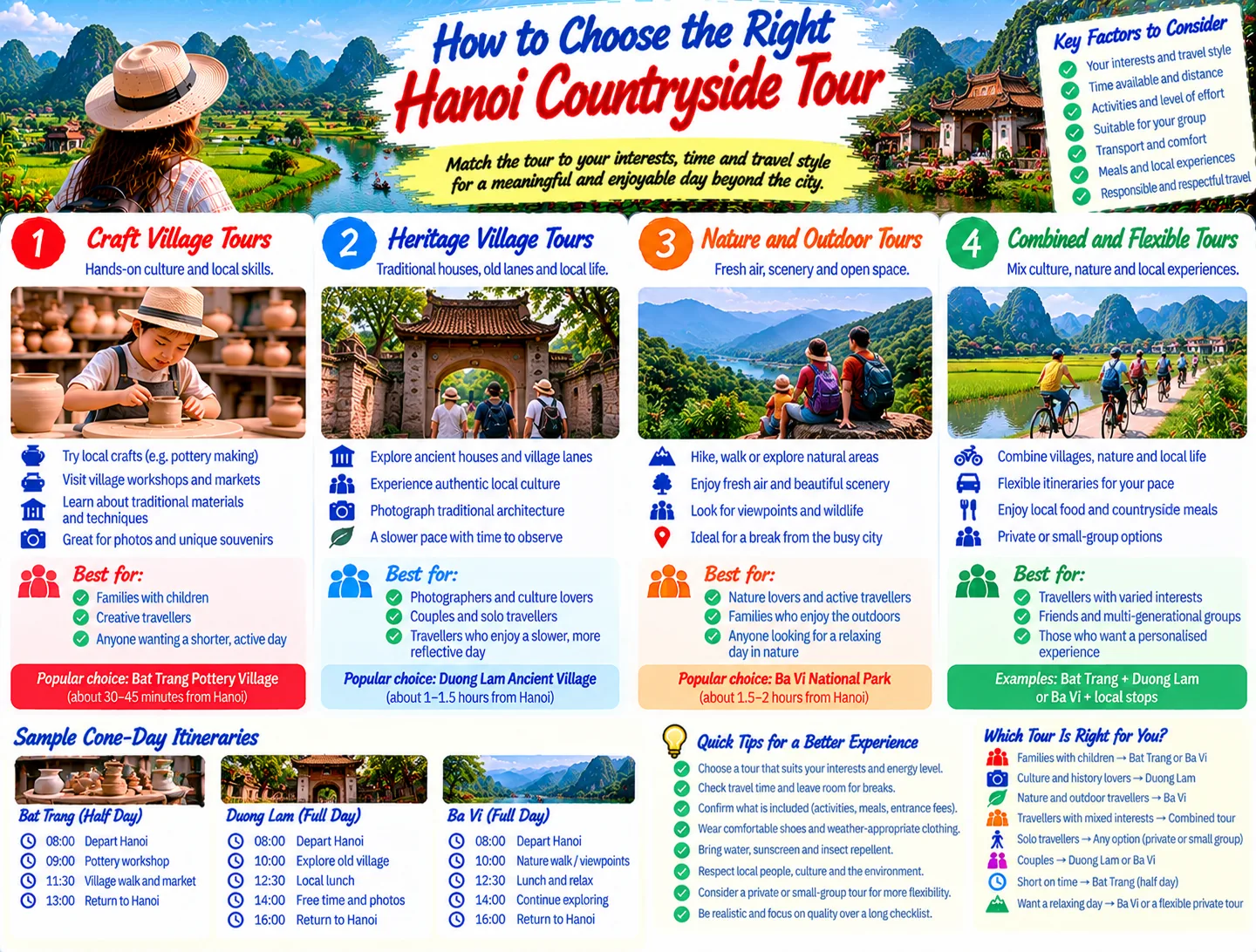
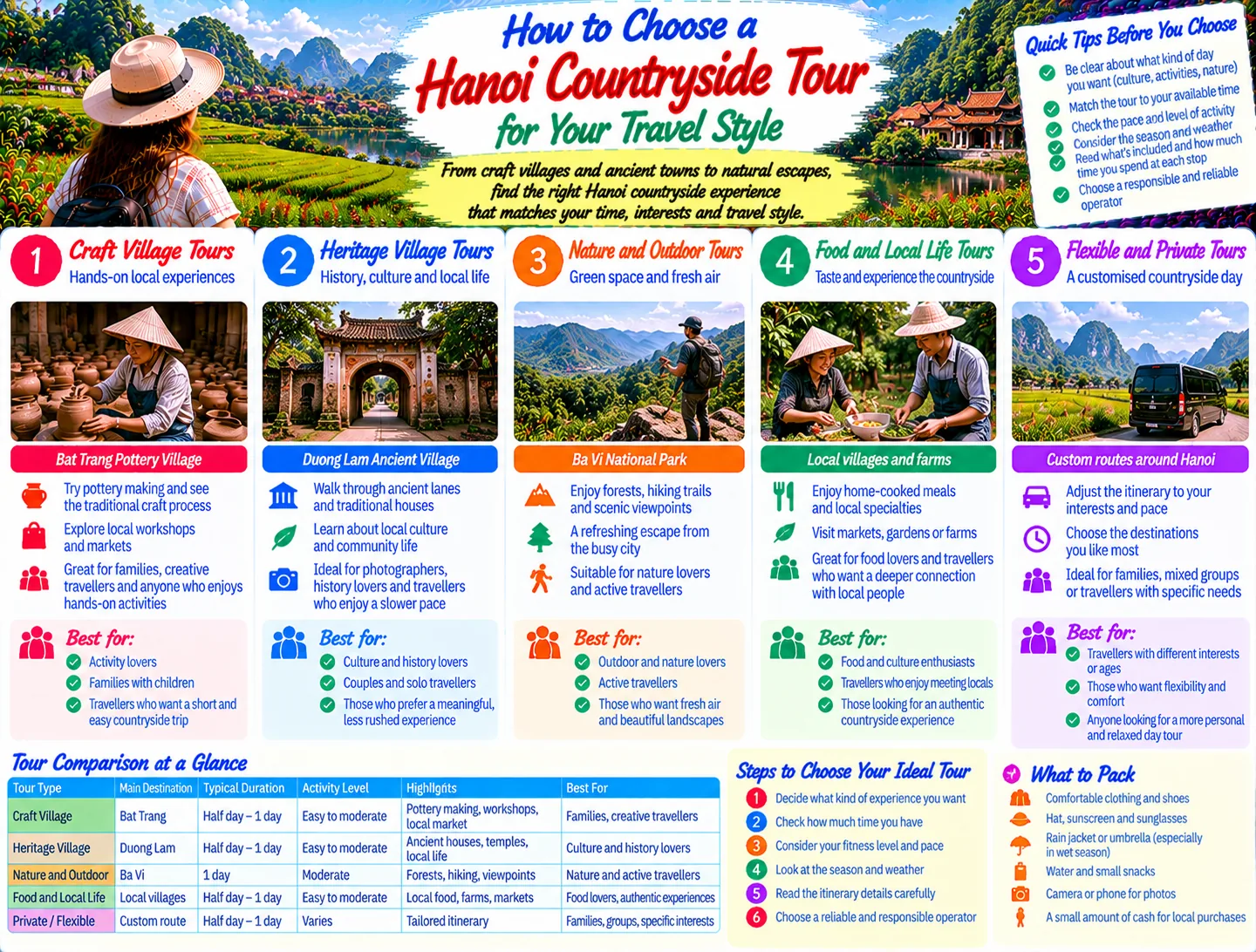
Most travelers can divide the options into four broad styles:
- Heritage villages: best for architecture, local history, temples, and an unhurried walk.
- Craft villages: best for hands-on activities, shopping, and family-friendly experiences.
- Nature escapes: best for forest air, viewpoints, gardens, and a break from city streets.
- Longer regional day trips: best for travelers willing to spend more of the day in transit for a bigger landscape or landmark.
For background on how distance, transport, and inclusions affect a choice, see How to Compare Day Trips from Hanoi. It is useful to decide your priorities before comparing itineraries line by line.
Choose the countryside experience before choosing the destination
For heritage and village atmosphere
Duong Lam is a strong choice when you want a cultural day rather than a checklist of viewpoints. Its appeal lies in the relationship between old lanes, houses, gates, communal spaces, temples, and everyday village life. The experience works best when you walk slowly and allow time for details instead of treating the village as a photo stop. Expect uneven surfaces, occasional narrow lanes, and a quieter rhythm than central Hanoi.
A heritage visit also benefits from a considerate attitude. Residents live and work among the historic buildings, so ask before photographing people or entering private spaces. Avoid blocking entrances, keep voices low near worship areas, and buy food or crafts from local sellers when you genuinely want them rather than treating the village as a staged backdrop. The site’s dedicated guide, Visiting Duong Lam with Care for a Living Heritage Village, adds useful context for planning this kind of outing.
For pottery and an easy half-day
Bat Trang suits travelers who want a more compact outing with a clear activity. Pottery workshops can make the visit engaging for children and adults, while the village’s shops provide a practical way to take home a locally made object. Because it is closer to Hanoi than many mountain destinations, it can fit a half-day schedule or pair with another eastern riverside stop if transport and opening arrangements are confirmed in advance.
Do not assume every workshop offers the same activity or that a demonstration automatically includes making your own piece. Ask what is included, how long the activity takes, whether the finished item can be collected or delivered, and how fragile purchases should be packed. The related Half-Day Visit to Bat Trang Pottery Village is a useful companion when you are deciding whether a short craft-focused route is enough.
For forest and cooler mountain scenery
Ba Vi is the natural choice when the priority is greenery rather than village architecture. The official Ba Vi National Park information site describes the park as a large protected area with three principal peaks and rich plant and animal diversity. That makes it a different type of countryside tour: the journey is about moving from urban streets into a broad forest landscape, not simply visiting one compact attraction.
Conditions can change with season, weather, road access, and park notices. Check the official park information before departure instead of relying on an old itinerary for opening arrangements, ticket procedures, or flower seasons. The park’s own site is the best place to start, and our practical overview, A Nature-Focused Day in Ba Vi, helps frame the route around walking, scenery, and realistic energy levels.
How to build a realistic one-day route
The biggest planning mistake is trying to combine every famous countryside destination in a single day. Hanoi’s roads can be busy, stops may take longer than expected, and village visits are more enjoyable when you are not watching the clock every ten minutes. Start with one anchor experience and add only a nearby, compatible stop.
These route patterns are easier to manage:
- Heritage-first day: spend most of the day in Duong Lam, with time for lanes, historic buildings, a meal, and nearby temples or viewpoints only if transport is straightforward.
- Craft-and-culture half-day: make Bat Trang the anchor, then return to Hanoi or add another eastern-area stop after checking the actual travel plan.
- Nature-first day: give Ba Vi the majority of the day. A forest route with pauses is more satisfying than squeezing in a distant village afterward.
- Flexible private day: select one main destination and leave room for lunch, weather, traffic, and spontaneous local stops.
Use the category page for Private Day Tours if you want to compare the value of adjustable timing with a fixed group itinerary. Flexibility matters most when your group includes young children, older travelers, photographers, or anyone who prefers fewer stops and longer visits.
What to check before booking a countryside tour
Travel time and departure point
Ask for an approximate door-to-door schedule, not just a destination name. “From Hanoi” can mean a central hotel pickup, a meeting point, or a transfer from the edge of the city. Confirm whether pickup is included, how long the return journey usually takes, and whether the route changes during busy periods. A tour that looks short on a map may feel very different if the vehicle spends much of the day in traffic.
What the price actually includes
Request a clear list of inclusions: transport, guide, entrance fees, meals, workshop fees, boat rides if relevant, and hotel pickup. Avoid relying on an attractive headline price when the essential activities are optional extras. Current fees and opening arrangements can change, so a responsible operator should confirm them rather than promise a fixed figure copied from an old page.
Walking, stairs, and surfaces
Village lanes may be uneven, forest routes can involve steps or slopes, and wet weather can make any outdoor surface more difficult. Tell the operator about mobility needs before booking. Comfortable shoes, sun protection, water, and a light rain layer are sensible basics, but they do not replace asking whether the route itself is suitable.
Group size and pace
A large group can lower the cost but may reduce time for questions, workshops, and quiet observation. A private tour can be worthwhile when you want to start early, linger in a village, or adapt the day to children. Read When a Private Day Tour Makes Sense for a practical comparison rather than assuming private always means better.
Seasonal planning without relying on promises
Hanoi has distinct seasonal changes, and countryside conditions can feel different from the city. The official Vietnam Tourism page for Hanoi describes cool, sometimes drizzly winters, hot and humid summers, and shorter pleasant periods in spring and autumn. These broad patterns are useful for choosing clothing and expectations, but they are not a guarantee of weather on a particular day.
For a village walk, cooler and drier conditions usually make long outdoor exploration more comfortable. For Ba Vi, seasonal flowers and forest atmosphere may be part of the appeal, but you should verify current conditions through the park’s official notices. During hot or wet periods, plan earlier outdoor activity, carry water, and keep the itinerary less crowded. In every season, leave some margin for a late return rather than scheduling an important evening connection immediately after the tour.
Public holidays and weekends can change the atmosphere. Popular sites may be busier, workshops may have more visitors, and roads can slow down. If you prefer quiet photography or relaxed conversations, ask whether a weekday departure is possible.
Eating, shopping, and behaving well in rural communities
Food is often one of the most memorable parts of a countryside day, especially when a meal includes local ingredients or a family-run setting. Confirm dietary needs early and be precise about allergies. If a meal is not included, ask whether the guide recommends a particular place and whether the menu is fixed or ordered individually.
Shopping works best when it supports the place rather than turning it into a transaction-only visit. At Bat Trang, inspect pottery carefully and ask about shipping or packing before buying large pieces. In heritage villages, purchase directly from makers when possible. At natural sites, do not remove plants, rocks, or other objects. Carry rubbish back to an appropriate bin, follow marked routes, and keep noise down in forest and religious areas.
Photography deserves the same care. Landscapes and public architecture are generally easy subjects, but people, homes, workshops, and ceremonies are not automatically public performances. A smile and a request are better than a camera held inches from someone’s work.
Questions to ask when comparing itineraries
Before paying a deposit, ask these practical questions:
- How much time is spent traveling versus visiting the destination?
- Which activities are confirmed, and which depend on availability?
- Are entrance fees, workshop charges, meals, and drinks included?
- What happens if rain, road conditions, or a venue change affects the route?
- How much walking, climbing, or standing is expected?
- Is the group shared, or can the timing be adjusted?
- What is the latest realistic return time to Hanoi?
Clear answers are more valuable than a long list of attractions. If an itinerary names three distant places but gives no visit duration, treat that as a warning sign. A well-designed Hanoi countryside tour explains the sequence, the pace, and the compromises.
A simple decision guide
Choose Duong Lam if your ideal day includes historic lanes, village stories, and a cultural pace. Choose Bat Trang if you want a hands-on craft experience that can fit into a shorter outing. Choose Ba Vi if forest scenery, open space, and a nature reset matter more than built heritage. Choose a private format if your schedule, mobility, family needs, or photography goals require flexibility. If you are comparing a much longer trip, use the Day Trip Planning & Comparisons category to weigh distance against the time available.
There is no single best countryside tour for every traveler. The strongest choice is the route that gives one destination enough time to become more than a photograph, uses current information for practical details, and respects the communities and landscapes that make the escape worthwhile.
Conclusion
Hanoi countryside tours are easiest to enjoy when you choose by experience first: heritage, craft, nature, or a flexible combination. Build around one realistic anchor, verify current arrangements with official sources, and ask direct questions about transport, inclusions, walking, and timing. With that preparation, a day outside Hanoi can feel unhurried, specific, and genuinely different from the city.
JOIN THE CONVERSATION
Comments (0)
No comments yet. Be the first to share a thought.