Hanoi countryside tours are easiest to enjoy when you choose a theme rather than trying to collect every famous stop in one day. The villages and green landscapes outside the capital reward a slower rhythm: one main destination, a flexible lunch plan, and enough time to notice how craft, farming, architecture, and local life fit together. This guide helps you choose the right route, compare transport styles, and build a practical day without relying on invented timetables or rushed promises.
What makes a good Hanoi countryside tour?
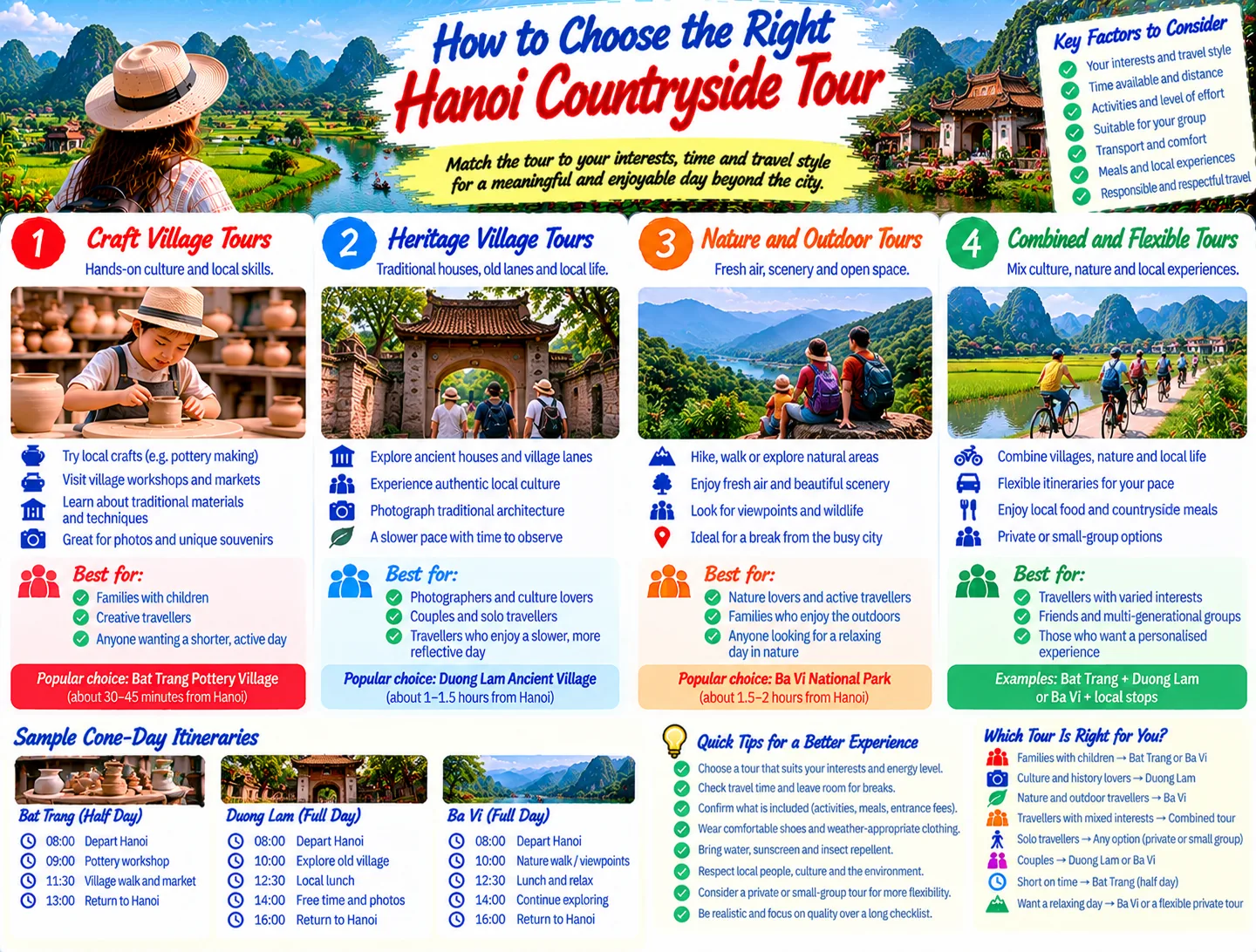
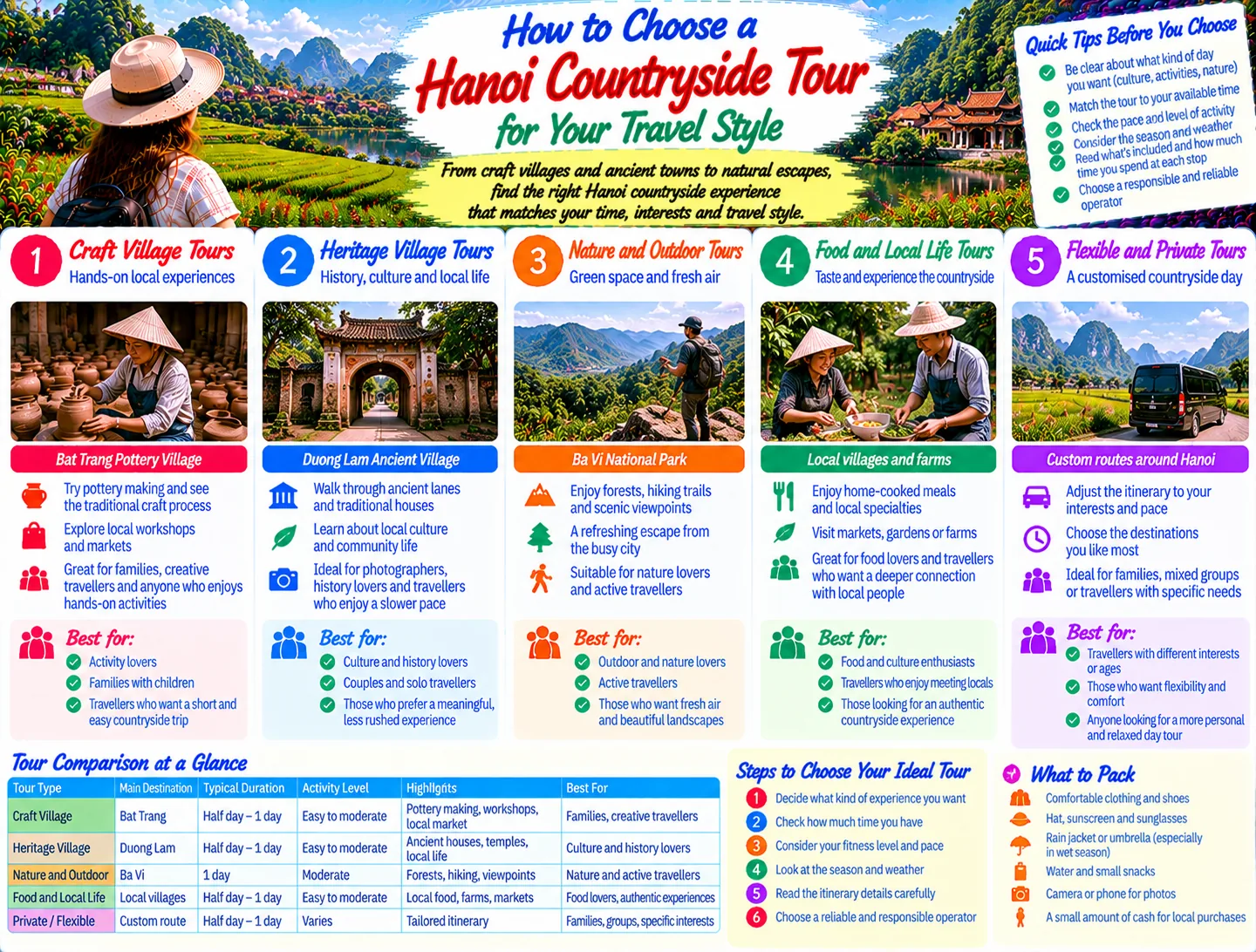
A useful countryside itinerary should feel different from a city sightseeing loop. Instead of measuring success by the number of places visited, look for a coherent experience. A strong route usually combines one anchor attraction with space for walking, a meal, and unscheduled discoveries. That might mean a heritage village and its lanes, a craft community and a hands-on activity, or a nature-focused outing with time away from traffic.
Start with three questions:
- Do you want culture and architecture, traditional craft, or open-air scenery?
- How much walking, heat, and uneven ground will your group enjoy?
- Would you rather follow a fixed group itinerary or adjust the day around your own pace?
The answer matters more than a dramatic list of destinations. A family may value short transfers and a simple meal stop, while photographers may prefer early light and longer stays in one village. If you are still comparing formats, How to Compare Day Trips from Hanoi offers a useful framework for weighing travel time, activity level, and flexibility.
Choose your countryside theme before choosing a place
Heritage and village life
For a culture-led day, Duong Lam is a natural starting point. The appeal is not only a single landmark but the feeling of moving through a living village landscape: lanes, old houses, communal spaces, and everyday activity. Visit with curiosity rather than treating the area as an outdoor museum. Ask before photographing people, keep voices low near homes and worship spaces, and remember that residents are living alongside visitors.
The site’s character is best appreciated on foot. Allow time to pause rather than filling the schedule with distant add-ons. The published guide Visiting Duong Lam with Care for a Living Heritage Village explains how to approach the visit respectfully. You can also use the Duong Lam Ancient Village category to compare related planning ideas before you book.
Craft and making
Craft villages suit travellers who want an activity rather than a purely observational stop. A pottery-focused outing, for example, becomes more memorable when you leave time to see how materials are prepared, try a simple making activity if available, and browse with an understanding that handmade work takes time. Do not assume every workshop offers the same program; confirm what is included with the operator or venue before travelling.
Craft is also a strong rainy-day option because the experience can be built around indoor spaces. The official Vietnam Tourism site lists Hanoi’s Craft Village Tourism & Gastronomy Festival for October 1–31, 2026, describing it as a celebration of traditional craft villages, food, artisans, businesses, and visitors. That kind of event context is a reminder to check the current cultural calendar when planning, while treating event dates and programs as changeable.
Nature and a cooler-feeling escape
If your priority is greenery, choose a route that gives the landscape room to lead. Ba Vi is the obvious category to explore for a nature-first day, but nature trips still need realistic planning. Weather can change the experience, roads can feel slower than a map suggests, and a short walk may be more enjoyable than an ambitious list of viewpoints. Use the Ba Vi Nature Trips category and the guide A Nature-Focused Day in Ba Vi when deciding how much outdoor time suits your group.
How to compare transport options
Transport changes the character of a Hanoi countryside tour. A shared minibus can be practical when you want a simple pickup and a set plan, but it offers less control over pauses. A private car or private day tour usually makes more sense when your group has different mobility needs, wants to linger at one stop, or prefers to combine a village with a meal chosen on the day. Motorbike travel can provide independence for experienced riders, yet it demands more attention to traffic, weather, navigation, and fatigue.
When comparing tours, ask what “transport included” actually means. Clarify the pickup area, whether transfers are direct or shared, how long the vehicle waits at each stop, and whether entrance fees, meals, guide services, or activities are separate. Avoid choosing only by the lowest headline price: a cheaper itinerary may contain more waiting, fewer choices, or a tighter schedule.
Build a buffer into the return journey. Countryside roads are affected by traffic, local activity, weather, and the time of day. A tour that looks comfortable on paper can become tiring if every stop is timed to the minute. For a broader discussion of flexibility, compare the advice in When a Private Day Tour Makes Sense.
A practical one-day route structure
You do not need a rigid timetable to have a well-organised day. Use a sequence that protects energy:
- Settle into the transfer. Keep the first part of the journey simple. Confirm the day’s main destination and any walking limitations before you arrive.
- Visit one anchor site. Give the main village, landscape, or workshop your best attention rather than arriving late and rushing through.
- Take a proper break. A meal or drink stop is part of the experience, not wasted time. Choose a place that fits your group and confirm what is available.
- Add one nearby activity. Pick a complementary stop, such as a short walk, craft session, or heritage feature. Avoid adding a second major destination unless the route has been specifically designed for it.
- Keep the return flexible. Leave room for traffic and a final pause. A calm finish is better than squeezing in one more photo stop.
This structure works across different Hanoi countryside tours because it is based on pacing rather than a fixed destination list. It also makes the day easier to adapt if rain arrives, a workshop is busy, or someone in the group needs more rest.
What to check before booking
Inclusions and exclusions
Read the itinerary line by line. Look for the exact pickup boundary, vehicle type, guide language, meals, entrance tickets, activities, and return point. If the description uses broad phrases such as “visit a village” or “experience local culture,” ask what you will actually do there. A good operator can explain the sequence without promising details that depend on local conditions.
Physical comfort
Ask about walking surfaces, stairs, time outside, toilet access, and opportunities to sit. Village lanes may be uneven, and nature routes can involve slopes or damp ground. Comfortable shoes, sun protection, water, and a light rain layer are sensible basics, but the most important preparation is choosing a route that matches the least confident walker in your group.
Season and weather
Weather should influence the theme, not just the packing list. Hot or wet conditions can make a long outdoor route feel harder, while a craft or heritage day may remain manageable with more time indoors. Check the forecast close to departure and confirm whether the operator changes the plan during severe weather. Do not rely on an old blog post for current opening arrangements, road conditions, or event programming.
How to travel more respectfully
Countryside travel works best when visitors remember that villages are communities, not staged sets. Dress neatly for religious or ceremonial spaces, follow signs, and ask permission before entering private areas or taking close-up photographs. Buy directly from makers when possible, but do not pressure artisans to discount work that reflects time and skill. Keep rubbish with you until you find a bin, and avoid loud behaviour near homes.
Respect also means allowing the day to be less predictable. A shop may be closed, a family may be preparing a meal, or a lane may be busy with local activity. A flexible attitude creates better encounters and prevents the guide from turning normal life into a performance. If children are travelling, explain these expectations before the trip so they can participate thoughtfully.
Which Hanoi countryside tour is right for you?
Choose Duong Lam when your group is most interested in heritage, village texture, and a walking-led cultural day. Choose a craft village when making, shopping, and indoor activity are more important than scenery. Choose Ba Vi when greenery and a change of atmosphere are the priority. If your group cannot agree, a private tour may be the most practical format because the day can give one theme more time instead of forcing everyone through a long checklist.
For families, the best route is usually the one with the fewest complicated transitions. For couples or solo travellers, a slower village or nature day may offer more atmosphere than a packed highlights tour. For first-time visitors with limited time, choose one clear theme and use the return journey to reflect rather than trying to prove you covered the entire region.
Food, breaks, and local spending
Food deserves a place in the route, even when it is not the main reason for travelling. A countryside meal can give your group a chance to rest, but do not build the entire day around a restaurant you have not independently confirmed. Ask whether the menu can accommodate dietary needs, whether drinks are included, and how much time the stop normally takes. If you are buying snacks or produce, choose modest quantities and carry small reusable bags where practical.
Local spending is most meaningful when it supports the people whose work makes the visit possible. Handmade pottery, woven goods, preserves, or other products may vary in finish because they are made by people rather than factories. Look carefully, ask polite questions, and buy only what you genuinely want. A respectful purchase is better than bargaining aggressively or treating a workshop as a free photo set.
Plan a quiet pause after lunch rather than adding another major attraction. This is especially useful in hot weather and for groups travelling with children or older adults. A route that protects energy usually produces better conversations, photographs, and memories than one that keeps moving simply to fill the itinerary.
Final planning checklist
- Pick one main theme and one anchor destination.
- Confirm the pickup area, transport, inclusions, and return plan.
- Check current weather and ask about changes to activities.
- Match walking demands to the least mobile traveller.
- Carry water, sun protection, comfortable shoes, and modest clothing for cultural sites.
- Plan to spend money thoughtfully with local makers and small businesses.
- Leave enough time for the journey back to Hanoi.
The best Hanoi countryside tour is not necessarily the longest or most heavily advertised. It is the one whose route, pace, and purpose match your group. Choose a destination you can experience properly, leave room for ordinary local life, and treat the countryside as a place to visit with attention rather than a backdrop to rush through.
JOIN THE CONVERSATION
Comments (0)
No comments yet. Be the first to share a thought.