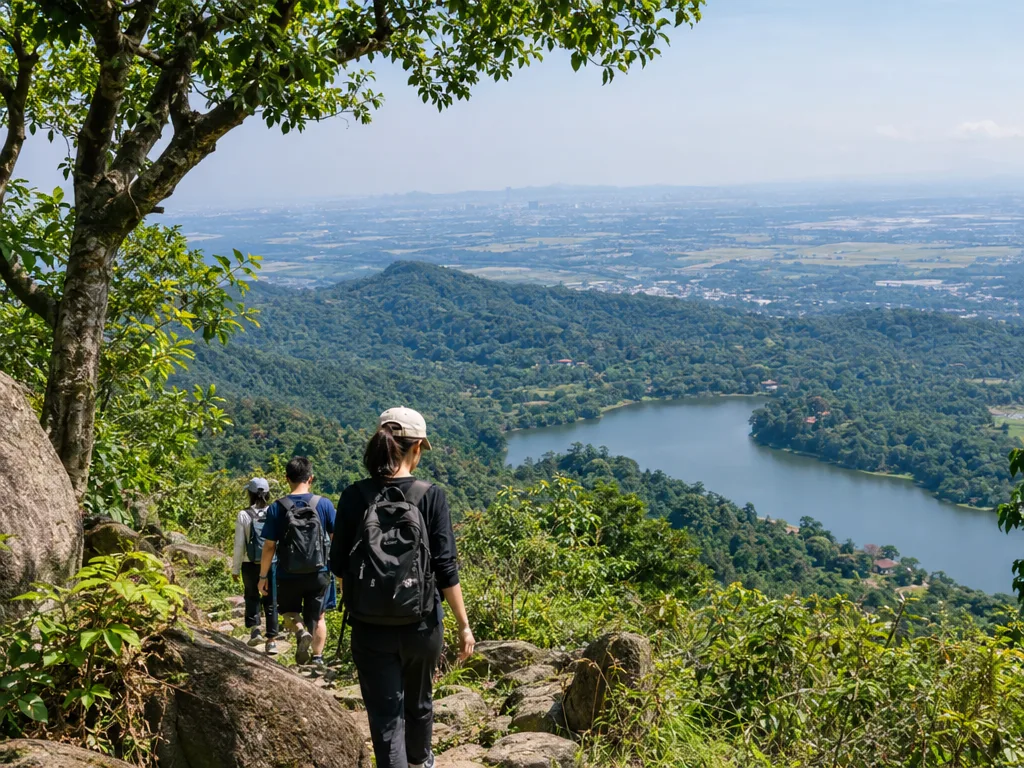
Ba Vi Nature Trips are easiest to enjoy when you treat the mountain as a layered landscape rather than a checklist of attractions. From Hanoi, a day in Ba Vi can combine cool forest, mountain views, temple trails, and quiet time outdoors, but the best route depends on weather, walking ability, and how early you can start. This guide helps you choose a realistic plan without pretending that every stop fits into one outing.
What makes Ba Vi worth a day trip?
Ba Vi National Park rises west of Hanoi as a distinct mountain massif above the Red River plain. The park is known for three prominent peaks: Vua, Tan Vien, and Ngoc Hoa. Its appeal is the change in atmosphere as you climb: warm lowland air gives way to denser forest, cooler slopes, and mist around the upper trails. That variety makes Ba Vi more than a scenic drive. It is a practical choice for travelers who want a nature-focused break without committing to a multi-day trek.
The park also combines natural and cultural landscapes. Summit temples connected with Tan Vien Son Thanh, the mountain spirit of Vietnamese mythology, sit within the forest rather than apart from it. Other visitors come for pine trees, old colonial-era ruins, streams, or the chance to walk quietly under a forest canopy. You do not need to do all of these things to have a satisfying day.
Choose your Ba Vi route before you leave
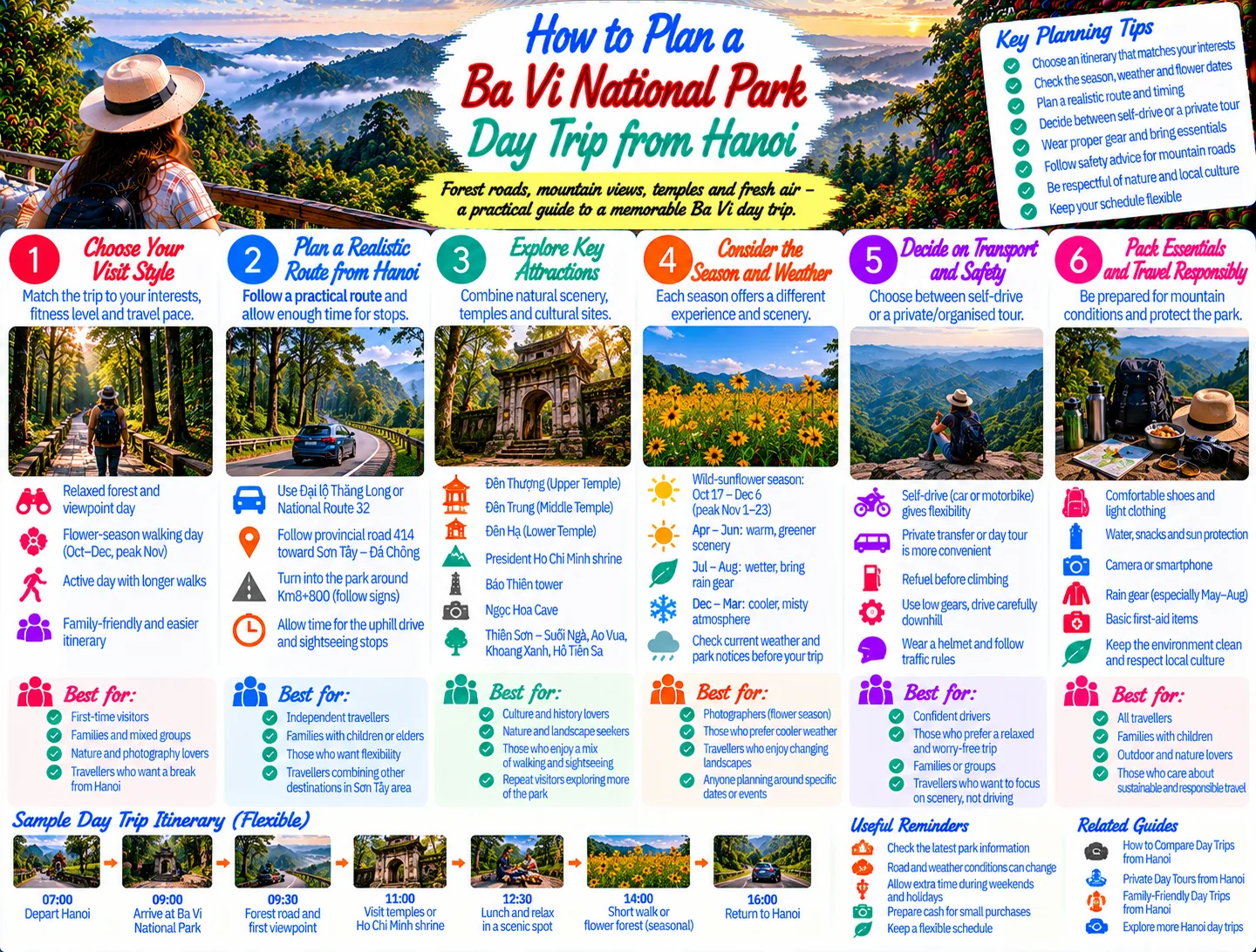
A good itinerary begins with one main experience and one secondary experience. Trying to combine a long summit walk, several viewpoints, a stream trail, and a leisurely meal can turn a nearby escape into a rushed day. Use your group’s energy and the forecast to choose among these broad route styles.
- Mountain and temple route: Choose this if your priority is elevation, forest stairs, and the atmosphere of the upper temples. It suits walkers who are comfortable with sustained uphill effort.
- Easy nature route: Choose lower-gradient paths, forest viewpoints, and a slower picnic or café stop if your group includes young children, older travelers, or anyone recovering from a busy travel schedule.
- Mixed sightseeing route: Combine a short forest walk with one cultural or historical stop. This works well when not everyone wants a strenuous hike.
- Photography route: Plan around soft morning light, mist, and seasonal vegetation rather than the number of locations visited. The journey through the forest can be as photogenic as any named viewpoint.
These are planning frameworks, not fixed park programs. Access, trail conditions, and local operations can change, so confirm practical details close to your visit.
How much walking should you expect?
Ba Vi rewards realistic expectations. Even when vehicles take you part of the way uphill, temple approaches can involve stone steps and uneven surfaces. Wet weather can make forest paths slick, while mist may reduce visibility and make stairs feel more demanding. Comfortable shoes with reliable grip are more useful than fashionable footwear.
For a moderate day
Choose one upper-area temple or viewpoint as your main goal, then leave time for pauses. Walk slowly enough to notice the change in vegetation and to keep the descent controlled. A moderate route is usually more enjoyable than adding another summit after everyone is already tired.
For an easier day
Stay with shorter walks, shaded areas, and stops that allow your group to rest. A nature trip does not have to mean reaching the highest point. Forest atmosphere, birdsong, cooler air, and an unhurried lunch can be the main event.
For stronger hikers
Start early and select one demanding ascent rather than treating every trail as compulsory. Build in a generous buffer for breaks, photographs, and changing weather. Downhill sections can be harder on knees than the ascent, so save energy for the return.
What to see in the forest and on the mountain
Ba Vi’s identity comes from contrasts. Lower areas feel more accessible and settled, while upper sections become cooler and more enclosed by trees. The park’s documented landscape includes tropical, subtropical, and montane forest zones, which helps explain why a short drive uphill can feel like a change of destination.
Look for the details between major stops: moss on old stone, ferns beside damp paths, bamboo near water, and changes in light under the canopy. Wildlife sightings are never guaranteed, especially on a busy day, but a quiet pace gives you a better chance of noticing birds and small forest life. Do not feed animals or leave food on trails.
At higher elevations, clouds can be part of the experience rather than a failure of the trip. Mist softens the landscape and cools the walk, but it can also remove distant views. If a panorama matters to you, keep your schedule flexible and be prepared to enjoy the forest even when the summit is covered.
Temples, ruins, and respectful sightseeing
The mountain’s temples are active cultural places, not simply scenic photo backdrops. Dress comfortably but respectfully, keep voices low, and follow local instructions around incense, offerings, and restricted areas. Ask before photographing people engaged in worship.
Ba Vi also contains remnants associated with earlier periods, including atmospheric ruins that have become part of the forest landscape. Treat these places as fragile heritage. Avoid climbing unstable walls, moving stones, carving names, or turning quiet areas into picnic spaces. A careful visit protects the character that makes the sites worth seeing.
If your group has different interests, divide the day into shared and optional time. One person might enjoy a temple approach while another prefers a shaded viewpoint or a slower walk. This is often more successful than making everyone follow the same pace.
When to plan Ba Vi Nature Trips
Weather should shape your decision more than a generic “best time” list. Clear, cooler periods can make uphill walking comfortable and improve the chance of distant views. Rain can bring dramatic cloud and greener forest, but it also increases slipping risk and may disrupt access. Hot, humid conditions make exposed climbing feel harder than the map suggests.
Seasonal flowers can attract extra visitors, especially at weekends. If your goal is quiet, choose a weekday where possible, arrive early, and avoid building the entire outing around one photograph. The mountain may look different from the image you saw online, and that is normal in a changing forest environment.
Before leaving Hanoi, check the weather for the mountain rather than relying only on the city forecast. Pack a light layer, water, sun protection, and a small rain cover. Carry out all rubbish, and use established paths. These simple choices matter in a protected landscape.
Transport and timing without overplanning
Ba Vi is close enough to visit by private car, hired vehicle, motorbike, or a combination of public transport and local connections, but the most convenient choice depends on your group. A private vehicle gives you more control over stops and return time. Public transport can work for flexible travelers, though it requires more buffer and advance checking of the final connection.
Do not plan from a city-centre departure time alone. Add time for traffic beyond Hanoi, navigation, parking, changing vehicles, restroom breaks, and weather-related delays. If your itinerary includes an uphill walk, starting early generally gives you cooler conditions and more time to adapt when the route takes longer than expected.
Keep the return journey in mind before beginning a late afternoon walk. Mountain roads and unfamiliar connections are less forgiving when you are tired or trying to travel after dark. A simple route completed comfortably is better than an ambitious plan that ends in a stressful departure.
A practical one-day outline
Use this as a flexible structure rather than a promise of exact timings.
- Morning: Leave Hanoi early, arrive with enough time to orient yourself, and choose the day’s main walk after checking weather and access conditions.
- Late morning: Complete one temple, viewpoint, or forest route at a steady pace. Pause before the descent rather than rushing to add another stop.
- Midday: Eat at a suitable designated place and refill water. Keep food contained and take all packaging with you.
- Afternoon: Choose a short secondary walk, cultural stop, or scenic break. If clouds build or rain arrives, shorten the plan without treating that as a failed day.
- Return: Leave a buffer for traffic and changing conditions. Confirm your vehicle or connection before you are ready to depart.
What to pack and what to avoid
- Wear shoes with grip and clothing that dries reasonably quickly.
- Carry water, a light layer, sun protection, and rain protection.
- Bring essential medication and a small personal first-aid kit.
- Use a phone battery pack if you rely on navigation or need to coordinate transport.
- Avoid disposable packaging, loud speakers, drones where they are not permitted, and collecting plants or rocks.
Check current access rules, fees, trail conditions, and facility availability before you go. This is particularly important after heavy rain, during busy seasonal periods, or when traveling with a large group.
Ba Vi for families and mixed-ability groups
Ba Vi can work for a mixed group when the itinerary allows people to opt in and out. Decide in advance which parts are shared, where the easiest rest point is, and who will turn back if the route becomes uncomfortable. Children often enjoy the change in temperature, forest textures, and short discoveries more than a long climb. Older travelers may prefer a viewpoint, shaded stop, or cultural site with fewer stairs.
Keep snacks and water accessible, but avoid leaving food around wildlife areas. Schedule breaks before people become exhausted, especially in humid weather. If someone has a knee, balance, or respiratory concern, choose a shorter route and confirm that the day’s access conditions are appropriate. A successful family outing is one where everyone returns with energy, not one where the strongest walker completes the most difficult trail.
Is Ba Vi right for your day?
Choose Ba Vi if you want a flexible mountain escape with forest, elevation, and cultural atmosphere close to Hanoi. It is less suitable if your priority is a guaranteed panoramic view, a completely flat walk, or a tightly timed list of many attractions. The strongest itinerary leaves room for the mountain to set the pace.
Plan one meaningful walk, treat the temples and ruins respectfully, and keep a backup route for changing weather. With those choices, Ba Vi Nature Trips can feel restorative rather than rushed: a day of trees, cooler air, and mountain quiet within reach of the capital.
JOIN THE CONVERSATION
Comments (0)
No comments yet. Be the first to share a thought.